What Is a Slurry in Cooking? How to Make and Use One
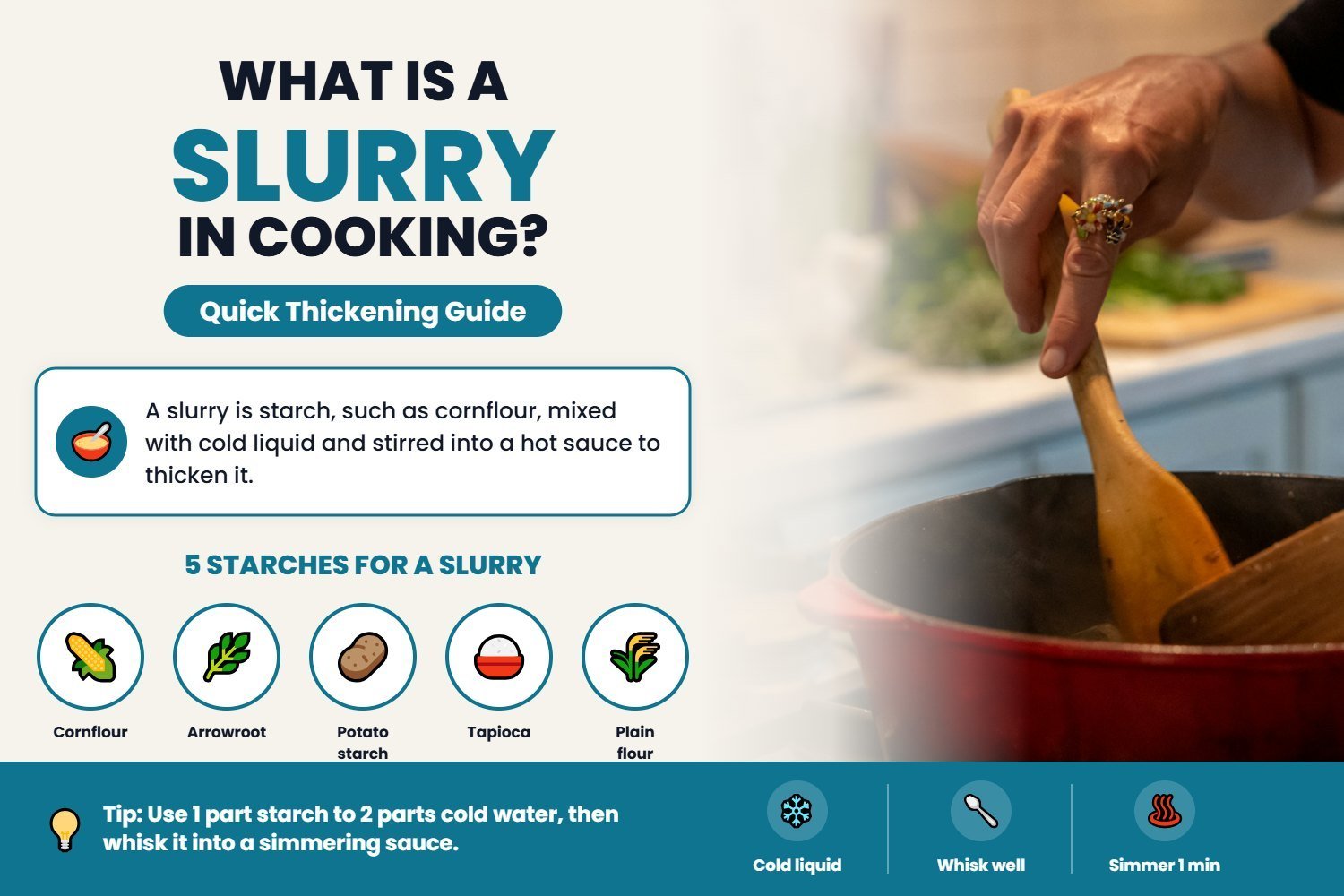
A slurry in cooking is a mixture of starch and cold liquid, usually cornflour and water, that is stirred into a hot sauce, soup or gravy to thicken it. Mixing the starch with cold liquid first separates the grains so they do not clump together, which is why a slurry gives a smooth, lump-free result in about a minute.
This guide explains how a slurry works, the best ratio, which starches to use, how a slurry compares with a roux and how to fix common problems.
The Short Answer
- What it is: starch mixed with a cold liquid to make a smooth, pourable paste.
- Basic ratio: 1 tablespoon of cornflour to 2 tablespoons of cold water thickens about 250 ml of liquid.
- How to use it: whisk it into a simmering liquid and cook for 1 to 2 minutes until glossy.
- Best starches: cornflour, arrowroot, potato starch, tapioca starch or plain flour.
- Key rule: never add dry starch straight to a hot liquid, or it will form lumps.
How Does a Slurry Work?
Starch grains swell when they are heated in liquid, and this is what makes a sauce thicker. If you add dry starch to a hot pan, the outside of each clump cooks straight away and seals in dry powder, which creates lumps. When you mix the starch with cold liquid first, every grain is separated and coated in water. Then, when the slurry hits the hot sauce, the grains swell evenly and thicken it smoothly.
How to Make a Slurry
- Put the starch in a small bowl or cup.
- Add twice as much cold liquid, such as water, stock or milk.
- Stir or whisk until completely smooth, with no dry lumps.
- Bring your sauce to a gentle simmer.
- Stir the slurry again, as starch settles quickly, then pour it in slowly while whisking.
- Simmer for 1 to 2 minutes until the sauce thickens and turns glossy.
- Add more slurry a little at a time if you need a thicker result.
Which Starch Should You Use?
| Starch | Ratio for 250 ml of sauce | Finish | Best for |
|---|---|---|---|
| Cornflour | 1 tbsp + 2 tbsp cold water | Glossy, slightly translucent | Gravy, stir-fries, sweet and sour sauce |
| Arrowroot | 1 tbsp + 2 tbsp cold water | Very clear and shiny | Fruit sauces, glazes, acidic sauces |
| Potato starch | 2 tsp + cold water | Glossy | Soups, gravies |
| Tapioca starch | 1 tbsp + 2 tbsp cold water | Clear, slightly stretchy | Fruit pie fillings, Asian sauces |
| Plain flour | 2 tbsp + 4 tbsp cold water | Opaque | Gravy, stews (cook for 3 to 5 minutes) |
UK cornflour is the same product as US cornstarch. If you are not sure about the difference, read our guide to cornflour vs cornstarch.
Slurry vs Roux: What Is the Difference?
A slurry and a roux both thicken liquids, but they work in different ways. A roux is flour cooked in fat, such as butter, before the liquid is added. It gives a rich, nutty flavour and is the base of white sauce and many gravies. A slurry is added at the end of cooking, has almost no flavour and gives a lighter, glossier finish.
- Use a slurry when you want a quick fix at the end of cooking, a clear or glossy sauce, or a gluten-free option with cornflour or arrowroot.
- Use a roux when you are making a creamy sauce from scratch and want a richer flavour.
Our guide to what a roux is in cooking explains how to make one step by step.
Common Slurry Problems and How to Fix Them
- Lumps: the starch was not fully mixed or was added too quickly. Sieve the sauce or blend it, and stir the next slurry well before adding it.
- Sauce is still thin: the sauce may not be hot enough. Bring it to a simmer and give it a minute before adding more slurry.
- Sauce went thin again: cornflour can break down if it is boiled hard for a long time or stirred too much. Add a little more slurry and keep the heat gentle.
- Floury taste: if you used plain flour, cook the sauce for a few more minutes.
- Too thick: whisk in a little hot stock, water or milk.
Tips for the Best Results
- Use stock or milk instead of water in the slurry for extra flavour.
- Add the slurry gradually, because it is easier to thicken more than to thin a sauce down.
- Arrowroot and tapioca are best added at the end and should not be boiled for long.
- Sauces thickened with cornflour may turn watery after freezing, so make them fresh if you can.
For more ways to thicken without flour, see our guide on how to thicken sauce without flour.
Frequently Asked Questions
What is a slurry used for in cooking?
A slurry is used to thicken sauces, gravies, soups, stews, stir-fries and fruit fillings quickly and without lumps.
What is the ratio for a cornflour slurry?
Use 1 part cornflour to 2 parts cold water. One tablespoon of cornflour with two tablespoons of water thickens about 250 ml of liquid.
Can you make a slurry with hot water?
No. Hot water makes the starch swell straight away and form lumps. Always use cold liquid.
Can you use flour to make a slurry?
Yes. Mix 1 part plain flour with 2 parts cold water and cook the sauce for 3 to 5 minutes to remove the raw flour taste.
Is a slurry gluten-free?
A slurry made with cornflour, arrowroot, potato starch or tapioca is naturally gluten-free. Check the label for cross-contamination if you are cooking for someone with coeliac disease.
Final Thoughts
A slurry is one of the simplest tricks in the kitchen: mix starch with cold liquid, whisk it into a simmering sauce and cook for a minute or two. Choose cornflour for everyday gravies, arrowroot for clear glossy sauces and a roux when you want extra flavour. For more kitchen basics, browse all our food and cooking guides.