How to Thicken Sauce Without Flour: 8 Easy Methods
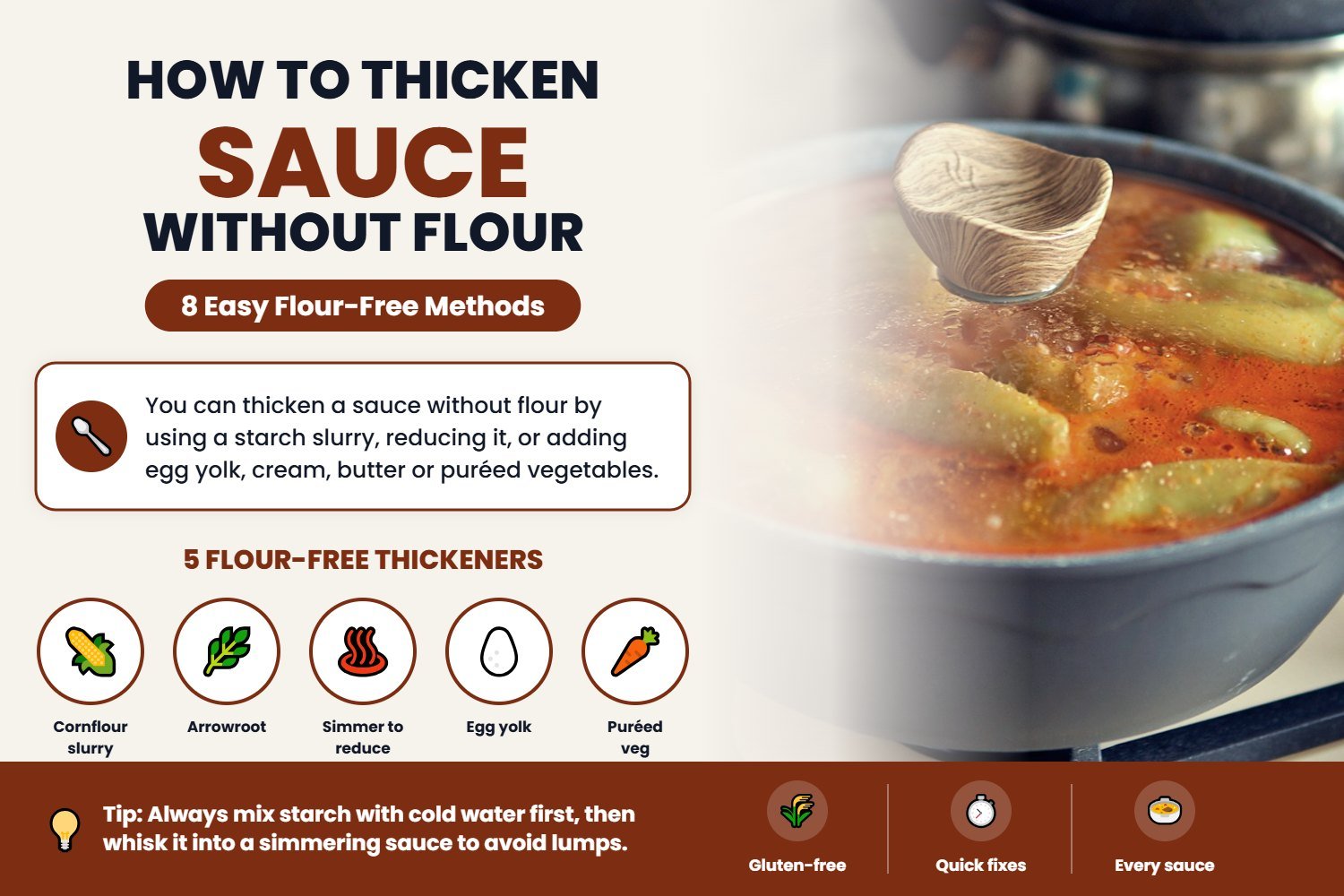
You can thicken a sauce without flour in several easy ways: stir in a cornflour or arrowroot slurry, simmer the sauce to reduce it, or enrich it with egg yolk, cream, butter, cheese or puréed vegetables. Most of these methods are naturally gluten-free and take less than 10 minutes.
This guide explains each method, how much to use, which sauces it suits best and how to fix common problems such as lumps or a sauce that turns thin again. If you would rather use the classic flour method, see our guide to making a roux.
The Short Answer
- Fastest method: mix 1 tbsp cornflour with 2 tbsp cold water and whisk it into about 250 ml of simmering sauce.
- No added ingredients: simmer the sauce uncovered so the water evaporates and the flavour gets stronger.
- For creamy sauces: stir in egg yolk, cream, butter or grated cheese off the heat.
- For soups and stews: blend some of the vegetables or add a little mashed potato.
- Golden rule: always mix starches with cold liquid first, never straight into hot sauce.
Why Thicken a Sauce Without Flour?
Flour is the traditional thickener in British cooking, but there are good reasons to skip it. Flour contains gluten, so it is not suitable for people with coeliac disease or a gluten intolerance. It also needs to cook for a few minutes to lose its raw taste, and it can make a sauce look cloudy. Many flour-free thickeners work faster and give a glossier finish.
8 Ways to Thicken a Sauce Without Flour
1. Cornflour slurry
Cornflour (called cornstarch in the US) is the most popular flour-free thickener in the UK. Mix 1 tablespoon of cornflour with 2 tablespoons of cold water to make a smooth paste, called a slurry. Whisk it into the simmering sauce and cook for 1 to 2 minutes until it thickens and turns glossy. This amount thickens about 250 ml of liquid to a medium consistency.
Cornflour works well in gravy, stir-fry sauces, sweet and sour sauce and fruit sauces. Avoid boiling it for a long time, as long, hard boiling can make it thin again.
2. Arrowroot
Arrowroot is a fine white powder made from the roots of a tropical plant. Use it in the same way as cornflour: mix with cold water first, then stir it into the hot sauce. It thickens at a lower temperature and gives a very clear, shiny finish, so it is ideal for fruit sauces and glazes. It also holds up well with acidic ingredients. Arrowroot is not ideal for dairy sauces, as it can turn slimy when mixed with milk.
3. Potato starch
Potato starch is a very effective thickener, so you need less of it than cornflour. Use about 2 teaspoons mixed with cold water for every 250 ml of sauce, add it towards the end of cooking and do not let it boil for long.
4. Reduction
Reducing is the simplest method because it needs no extra ingredients. Simmer the sauce uncovered over a medium heat and stir now and then. As the water evaporates, the sauce becomes thicker and the flavour becomes richer. This works best for tomato sauces, pan sauces, gravies made from stock and wine sauces. Taste before adding salt, as seasoning becomes stronger as the sauce reduces.
5. Egg yolk
Egg yolks thicken creamy sauces, custards and some soups. To stop the yolk from scrambling, whisk it in a bowl with a ladleful of the warm sauce first. This is called tempering. Then stir the mixture back into the pan over a low heat and do not let it boil. Cook until the sauce coats the back of a spoon and the egg is fully cooked.
6. Cream, butter or cheese
Double cream, crème fraîche, cream cheese and grated hard cheese all add body to a sauce. For a glossy finish, take the pan off the heat and whisk in a few cubes of cold butter one at a time. Grated Parmesan or Cheddar thickens pasta sauces, while a spoonful of cream cheese gives a quick creamy texture.
7. Puréed vegetables
Blending part of a soup or stew is one of the healthiest ways to thicken it. Remove a few ladles of the cooked vegetables, blend them until smooth and stir them back in. Cooked potato, carrot, butternut squash, cauliflower, onion and lentils all work well. You can also stir in a spoonful of tomato purée to thicken a tomato sauce.
8. Xanthan gum
Xanthan gum is often used in gluten-free baking, and a tiny amount thickens a large volume of liquid. Sprinkle about a quarter of a teaspoon over 250 ml of sauce while whisking quickly, as it can clump if added all at once. It works hot or cold, so it is useful for salad dressings and cold sauces too.
Which Thickener Should You Use?
| Thickener | Amount per 250 ml | Best for | Gluten-free? |
|---|---|---|---|
| Cornflour | 1 tbsp + 2 tbsp cold water | Gravy, stir-fries, sweet and sour | Usually, but check the label |
| Arrowroot | 1 tbsp + 2 tbsp cold water | Fruit sauces, glazes | Yes |
| Potato starch | 2 tsp + cold water | Soups, gravies | Yes |
| Reduction | No extra ingredients | Tomato, wine and pan sauces | Yes |
| Egg yolk | 1 to 2 yolks | Creamy sauces, custard | Yes |
| Butter or cream | 1 to 2 tbsp | Pan sauces, pasta sauces | Yes |
| Puréed vegetables | 1 to 2 ladles | Soups, stews, curries | Yes |
| Xanthan gum | About ¼ tsp | Dressings, cold sauces | Yes |
If you need a sauce to be gluten-free, check the packaging carefully. Most cornflour is naturally gluten-free, but some products may be made in factories that also handle wheat. Coeliac UK has more advice on gluten-free cooking.
How to Fix Common Sauce Problems
- Lumps: pour the sauce through a sieve or blend it with a stick blender. Next time, mix starch with cold water before adding it.
- Sauce went thin again: cornflour can break down if it boils too long or is stirred hard for a long time. Add a little more slurry and heat gently.
- Sauce is too thick: whisk in a splash of stock, milk or water until it reaches the texture you want.
- Cloudy sauce: use arrowroot instead of cornflour for a clearer finish.
- Egg sauce scrambled: take it off the heat straight away and blend it. Next time, temper the yolk and keep the heat low.
Frequently Asked Questions
What can I use instead of flour to thicken sauce?
Cornflour, arrowroot, potato starch, egg yolk, cream, butter, cheese, puréed vegetables and xanthan gum can all thicken a sauce without flour. You can also simply reduce the sauce by simmering it.
How much cornflour do I need to thicken a sauce?
About 1 tablespoon of cornflour mixed with 2 tablespoons of cold water thickens 250 ml of sauce to a medium consistency. Use less for a thin sauce and more for a thick gravy.
Can I thicken sauce without cornflour?
Yes. Reduce the sauce by simmering it, blend in some of the cooked vegetables, or stir in cream, butter, cheese or egg yolk.
How do you thicken a sauce quickly?
A cornflour slurry is the quickest method. It starts to thicken the sauce within a minute of being stirred into a simmering liquid.
Is cornflour gluten-free?
Cornflour is made from maize, which is naturally gluten-free. However, always check the label, as some brands may be at risk of cross-contamination with wheat.
Final Thoughts
You do not need flour to make a thick, glossy sauce. A cornflour or arrowroot slurry is the quickest fix, reducing the sauce gives the best flavour, and cream, butter, egg yolk or puréed vegetables add richness and body. Choose the method that suits your sauce, add it gradually and taste as you go. For more kitchen basics, read our guides to binders in cooking and how to stop meatballs falling apart, or browse all our food and cooking guides.