How to Stop Meatballs Falling Apart: 7 Proven Tips
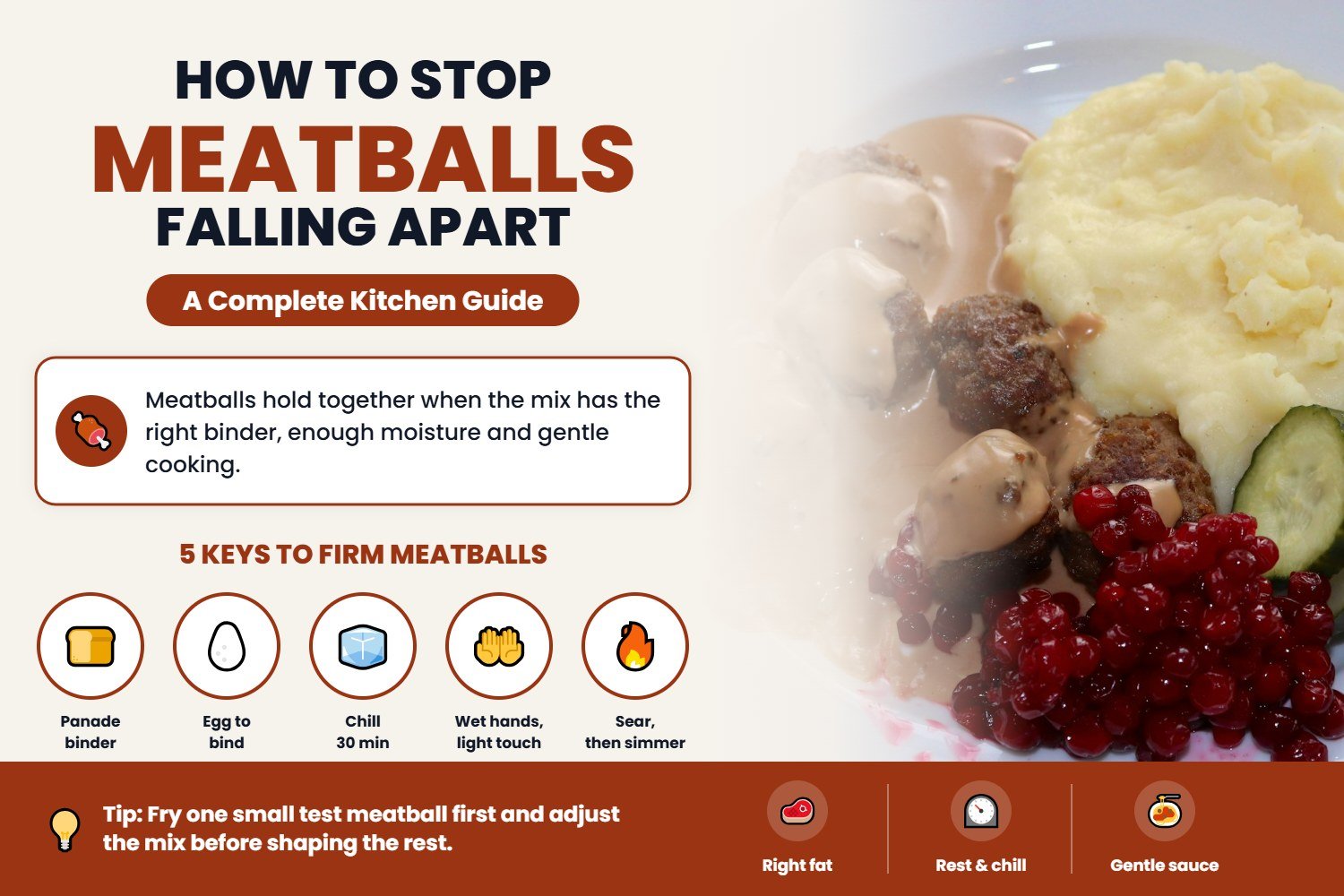
Meatballs fall apart for a handful of simple reasons: the mixture is too wet or too dry, there is not enough binder, the meat is too lean, or the meatballs are cooked too roughly. The good news is that every one of these problems is easy to fix once you know what to look for.
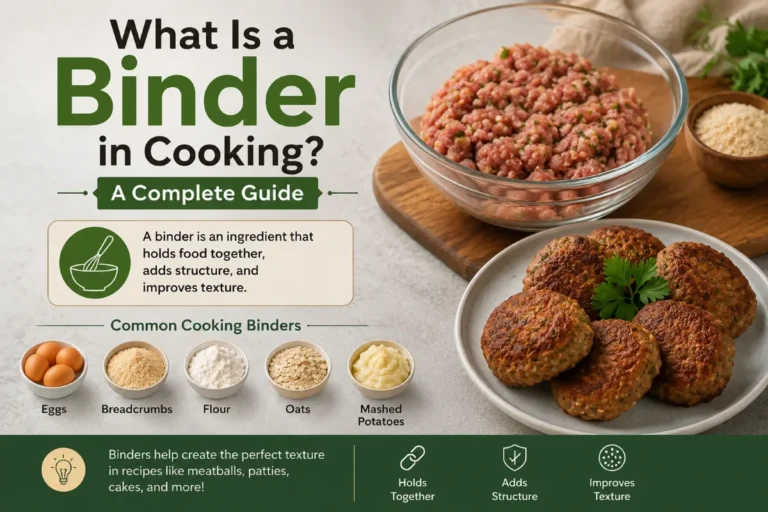
This guide explains why meatballs break up, the best binders to use, how to shape and chill them, and the safest ways to fry, bake or simmer them so they stay whole. If you want to understand how binders work in general, read our full guide to what a binder is in cooking.
The Short Answer
- Use a binder: a panade (bread soaked in milk) plus one egg per 500 g of mince works for most recipes.
- Get the moisture right: the mix should feel soft and slightly sticky, not wet or crumbly.
- Do not use mince that is too lean: around 15 to 20 per cent fat helps meatballs hold together and stay juicy.
- Chill before cooking: 30 minutes in the fridge firms up the fat and helps the shape set.
- Cook gently: brown them first, then simmer in sauce without stirring hard.
Why Do Meatballs Fall Apart?
Meatballs are held together by two things: the proteins in the meat, which stick together when the mince is mixed, and the binder, which fills the gaps and sets as it cooks. When either of these is missing or out of balance, the meatballs crack, crumble or break up in the pan.
The most common causes are:
- Too much liquid: extra milk, wet onions or too many eggs make a loose mix that cannot keep its shape.
- Too little binder: without breadcrumbs, a panade or egg, there is nothing to hold the meat together.
- Very lean mince: mince with less than 10 per cent fat tends to be dry and crumbly.
- Large chunks of vegetables: big pieces of onion or pepper create weak spots where the meatball splits.
- Undermixing: the mince needs a short mix to become slightly sticky so the proteins bind.
- Rough cooking: turning meatballs too early, crowding the pan or boiling the sauce hard breaks them.
The Best Binders for Meatballs
A binder is an ingredient that holds the mixture together. Most good meatball recipes use a combination of a starch and an egg.
| Binder | How much (per 500 g mince) | Best for |
|---|---|---|
| Panade (bread + milk) | 1 slice of bread or 30 g breadcrumbs soaked in 3 tbsp milk | Soft, juicy meatballs in sauce |
| Dry breadcrumbs | 30 to 50 g | Firmer meatballs for frying or baking |
| Egg | 1 medium egg | Almost every recipe |
| Grated Parmesan | 2 to 3 tbsp | Italian-style meatballs with extra flavour |
| Oats | 3 to 4 tbsp | A wholegrain alternative to breadcrumbs |
| Cooked rice | 3 to 4 tbsp | Greek and Middle Eastern style meatballs |
| Gluten-free breadcrumbs or ground almonds | 30 to 40 g | Gluten-free meatballs |
The panade is the favourite of many chefs. Soaking bread in milk creates a soft paste that spreads through the meat, holds in moisture and stops the proteins from tightening too much, so the meatballs stay tender as well as whole.
If you have no breadcrumbs, crushed crackers, cream crackers or plain crisps also work. For egg-free meatballs, add a little extra panade or a spoonful of grated cheese instead.
How to Make Meatballs That Hold Their Shape
- Make the panade first. Soak the bread or breadcrumbs in milk for 5 minutes, then mash it into a paste.
- Prepare the flavourings finely. Grate the onion or chop it very finely and squeeze out any extra liquid. Use minced garlic and chopped herbs.
- Mix gently but thoroughly. Combine the mince, panade, egg, seasoning and flavourings with your hands for 1 to 2 minutes, just until the mix looks even and feels slightly sticky.
- Test the texture. Squeeze a little in your hand. It should hold together without sticking badly to your fingers. Add a spoonful of breadcrumbs if it is too wet, or a splash of milk if it is too dry.
- Fry a test meatball. Cook a small piece, taste it and check it holds together before you shape the rest.
- Shape with wet hands. Lightly wet your hands with cold water and roll each ball firmly but gently. Keep the size even so they cook at the same speed.
- Chill for 30 minutes. Place the meatballs on a tray in the fridge. This firms them up and makes them much easier to cook.
How to Cook Meatballs Without Breaking Them
Pan-frying
Heat a little oil in a wide frying pan over a medium heat. Add the meatballs with space between them and leave them alone for 2 to 3 minutes until a crust forms. Only then turn them gently with tongs or a spatula. Moving them too early is one of the most common reasons they break.
Baking
Baking is the easiest way to keep meatballs whole. Place them on a lined baking tray and bake at 200°C (180°C fan) for 15 to 20 minutes, depending on size, until browned and cooked through. You can then add them to a sauce to finish.
Simmering in sauce
If you cook meatballs straight in sauce, make sure the sauce is at a gentle simmer, not a rolling boil. Add the meatballs one at a time, cover the pan and do not stir for the first 10 minutes. After that, shake the pan gently or turn them carefully with a spoon.
Whichever method you use, make sure meatballs are cooked through before serving. The Food Standards Agency advises cooking minced meat until it is steaming hot all the way through, with no pink meat left in the middle and the juices running clear.
Quick Fixes for Common Meatball Problems
| Problem | Likely cause | Fix |
|---|---|---|
| Mix is too wet and sticky | Too much milk, egg or onion juice | Add 1 to 2 tbsp breadcrumbs and chill |
| Meatballs crumble when shaped | Too dry or too lean | Add a splash of milk or a little more panade |
| Meatballs crack in the pan | Pan too hot or turned too early | Lower the heat and wait for a crust |
| Meatballs fall apart in sauce | Sauce boiling or stirred too much | Brown or bake first, then simmer gently |
| Meatballs are tough | Overmixed or too much breadcrumb | Mix less and use a panade instead of dry crumbs |
Tips for Different Types of Meatballs
- Beef meatballs: choose beef mince with 15 to 20 per cent fat. Very lean beef needs a little extra panade.
- Chicken and turkey meatballs: these are softer and leaner, so use a panade and an egg, and always chill them before cooking.
- Lamb meatballs and koftas: lamb has more fat and holds together well. A little cooked rice or breadcrumbs is usually enough.
- Vegetarian meatballs: use a stronger binder, such as egg plus breadcrumbs, mashed beans or flaxseed mixed with water.
If you are making a creamy sauce to serve with your meatballs, our guide to making a roux shows how to thicken it smoothly.
Frequently Asked Questions
Why are my meatballs falling apart in the sauce?
The sauce is probably boiling too hard, or the meatballs are being stirred before they have set. Brown or bake them first, then add them to a gently simmering sauce and leave them alone for 10 minutes.
Do you need egg in meatballs?
Egg helps meatballs hold together, but it is not essential. A panade, grated Parmesan or a little extra breadcrumb can bind them without egg.
How much breadcrumb do you put in meatballs?
Around 30 to 50 g of breadcrumbs per 500 g of mince works for most recipes. Too much makes meatballs dry and bready.
Should you chill meatballs before cooking?
Yes. Chilling for about 30 minutes firms up the fat and helps the meatballs keep their shape when they hit the pan.
Is it better to fry or bake meatballs?
Frying gives a better crust and flavour, while baking is easier and keeps meatballs whole. Both work well if you finish them in sauce.
Final Thoughts
Meatballs that hold together come down to balance: the right binder, the right amount of moisture, a little fat and gentle cooking. Make a panade, add one egg, chill the shaped meatballs and give them time to form a crust before you move them. For more kitchen basics, read our guide to binders in cooking or browse all our food and cooking guides.