Dying Tooth Nerve: Signs, Pain Relief and Treatment
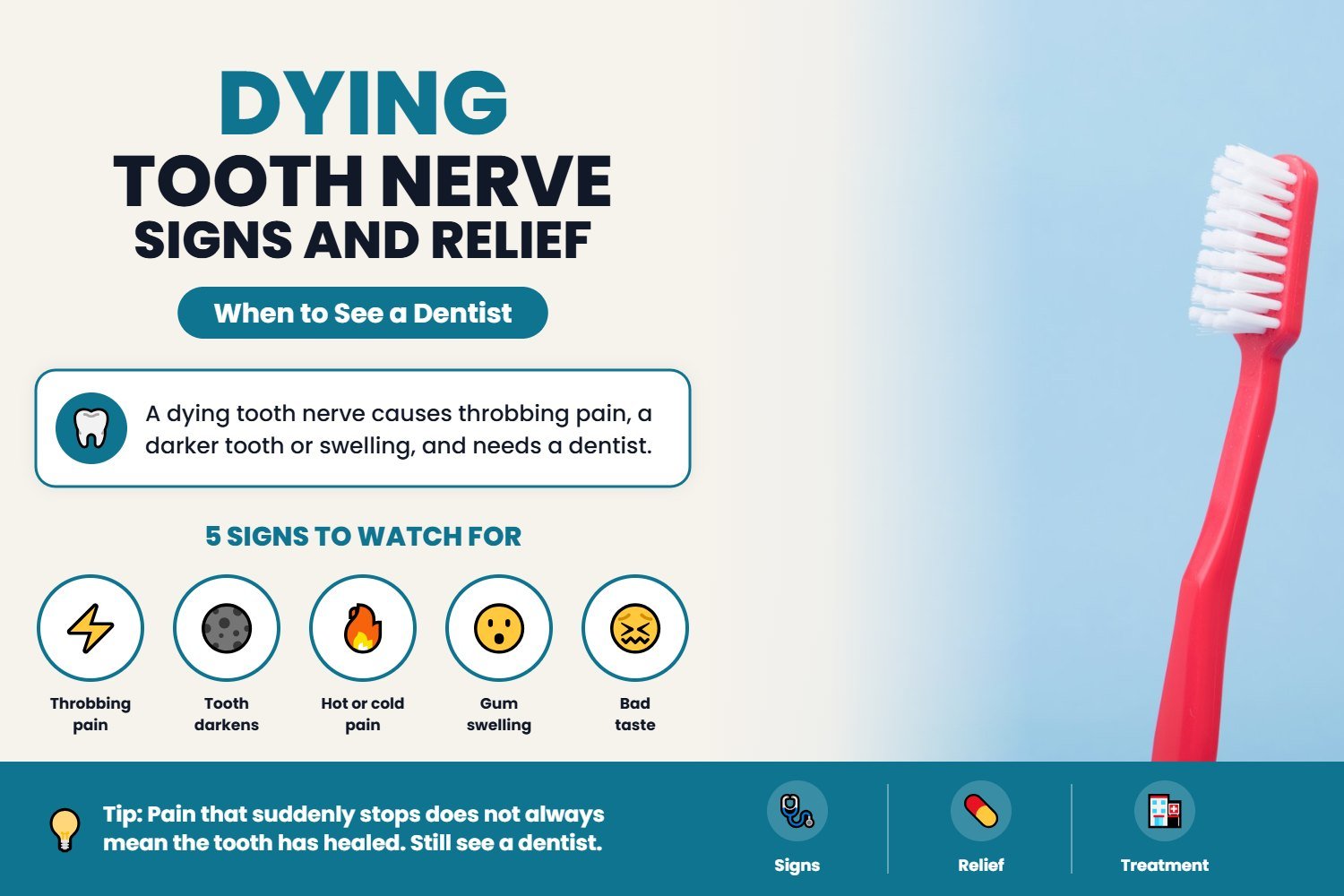
A dying tooth nerve happens when the soft tissue inside a tooth, called the pulp, is damaged by deep decay, a crack or an injury and starts to lose its blood supply. Common signs are throbbing pain, pain with hot drinks, a tooth that turns grey or darker, gum swelling and a bad taste in the mouth. A dying nerve cannot heal on its own, so you need a dentist, who will usually offer a root canal treatment or remove the tooth.
A dying tooth nerve causes throbbing pain, sensitivity to heat, a darker or grey tooth, gum swelling or a bad taste. You can ease the pain for a short time with painkillers taken as directed, a cold compress and salt water rinses, but the tooth needs a dentist. Treatment is usually a root canal or an extraction. Get urgent help if swelling spreads or you feel unwell.
Key Takeaways
- A dying nerve does not heal by itself, even if the pain stops.
- Pain that suddenly stops can mean the nerve has died, not that the problem is gone.
- An untreated dead tooth can lead to an abscess.
- Root canal treatment can often save the tooth.
- Facial swelling or fever needs urgent dental care or NHS 111.
This guide is general information, not medical advice. Always speak to a dentist, pharmacist or NHS 111 about your symptoms and before taking any medicine you are unsure about.
What Is a Dying Tooth Nerve?
Each tooth has a pulp in its centre, which contains nerves and blood vessels. When the pulp is badly irritated or infected, it becomes inflamed. If the damage is too deep, the pulp starts to die. Dentists call this pulp necrosis. A dead or dying pulp can then become infected and cause an abscess at the root of the tooth.
Signs of a Dying Tooth Nerve
⚡ Throbbing pain
Strong, pulsing pain that may get worse when you lie down or bite.
🔥 Pain with heat
Hot food or drinks trigger pain that lingers after you stop.
🌑 Darker tooth
The tooth may slowly turn yellow, grey or darker than the others.
😮 Swelling and bad taste
Swollen gums, a small spot on the gum or a bad taste can be signs of infection.
What Causes a Tooth Nerve to Die?
- Deep tooth decay that reaches the pulp.
- A crack or chip that lets bacteria into the tooth.
- A knock or injury to the tooth, even years earlier.
- Large or repeated fillings in the same tooth.
- Gum disease that reaches the root.
How to Ease the Pain Until You See a Dentist
- Take a painkiller such as paracetamol or ibuprofen, following the dose on the packet. Check the leaflet or ask a pharmacist if you are unsure which is right for you.
- Use a cold compress on your cheek for up to 15 minutes at a time.
- Rinse with warm salt water (half a teaspoon of salt in a glass of warm water), then spit it out.
- Avoid chewing on that side and avoid very hot, cold or sugary food and drinks.
- Sleep with your head raised. Our guide on how to relieve toothache at night has more tips.
Tip: Do not put aspirin or crushed tablets directly on your gum. It can burn the soft tissue and does not treat the cause.
How a Dentist Treats a Dying Tooth
| Treatment | What it involves | When it is used |
|---|---|---|
| Root canal treatment | The dentist removes the damaged pulp, cleans the inside of the tooth and seals it | When the tooth can be saved |
| Extraction | The tooth is removed | When the tooth is too damaged to save |
| Crown after root canal | A cap placed over the tooth to protect it | Often for back teeth after root canal |
| Antibiotics | Medicine for a spreading infection | Only alongside treatment, not as a cure on its own |
Root canal treatment and extractions are available on the NHS. You can find a dentist using the NHS Find a dentist service, and read more in the NHS guidance on toothache.
When to Get Urgent Help
| Situation | What to do |
|---|---|
| Pain lasting more than 2 days or not helped by painkillers | Contact a dentist |
| Swollen gum or face, high temperature or bad taste | Contact a dentist or NHS 111 the same day |
| Swelling spreading to your eye or neck, or trouble breathing, swallowing or speaking | Go to A&E or call 999 |
Frequently Asked Questions
Can a dying tooth nerve heal on its own?
No. Once the nerve starts to die, it cannot repair itself. A dentist needs to treat the tooth to stop infection.
Why did my tooth pain suddenly stop?
The pain may stop because the nerve has died. The tooth can still become infected, so it is important to see a dentist.
How long can a dead tooth stay in your mouth?
A dead tooth can stay in place for some time, but it can become infected and cause an abscess, so it should be checked and treated.
Does a dead tooth always turn black?
Not always. Many dead teeth turn yellow, grey or slightly darker over time, while some look normal.
Is root canal treatment painful?
Root canal treatment is done under local anaesthetic, so most people feel little pain during it. The tooth may be sore for a few days afterwards.
Final Thoughts
A dying tooth nerve is a sign that the tooth needs a dentist, even if the pain comes and goes. Painkillers, cold compresses and salt water rinses can help you cope for a short time, but only a root canal or extraction will fix the problem. Book an appointment as soon as you can, and get urgent help if you notice swelling or feel unwell.