Tooth Pain When Biting Down: Causes and What to Do
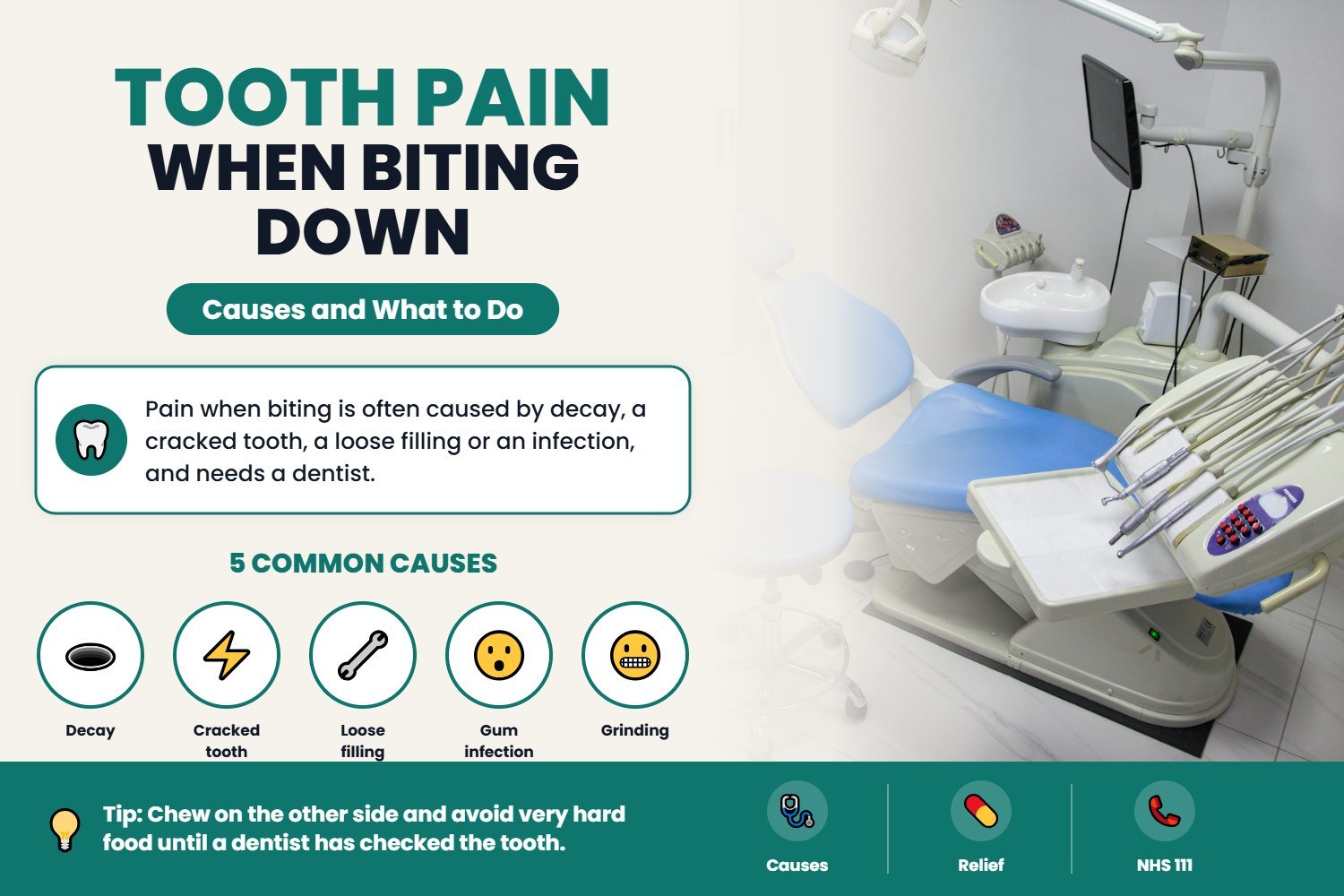
Tooth pain when biting down is usually caused by a cracked tooth, a cavity, a loose or broken filling, a dental abscess or an inflamed gum. It can also happen after a new filling or from grinding your teeth. Sharp pain on biting is a sign that something needs checking, so it is best to book a dentist appointment rather than wait for it to pass.
This guide is general information, not medical advice. If you have swelling in your face or jaw, a high temperature, or pain that painkillers do not help, contact a dentist or call NHS 111. Go to A&E if swelling affects your eye or neck, or you have trouble breathing or swallowing.
Pain when biting down usually means a cracked tooth, tooth decay, a damaged filling, an abscess or gum inflammation. Until you see a dentist, take paracetamol or ibuprofen as directed, chew on the other side, and avoid very hot, cold, hard or sweet foods. See a dentist within a few days, or urgently if you have swelling or a fever.
Key Takeaways
- Sharp pain when biting often points to a crack or a damaged filling.
- Throbbing pain with swelling can be an abscess and needs urgent care.
- Pain after a new filling may mean the filling is slightly too high.
- Painkillers help short term, but they do not fix the cause.
- Do not put aspirin on your gum; it can burn the tissue.
Common Causes of Tooth Pain When Biting Down
🦷 Cracked tooth
A small crack can open slightly when you bite, causing a sharp pain that stops when you release.
🕳️ Tooth decay
A cavity can reach the inner part of the tooth, making it sore when pressure is applied.
🔧 Loose or high filling
A filling that is damaged or slightly too high can make the tooth hurt when you bite.
⚠️ Dental abscess
An infection at the root can cause throbbing pain, tenderness and sometimes swelling.
Other causes include gum disease or food trapped between teeth, grinding or clenching your teeth at night, and sinus pressure, which can make several upper back teeth ache when you chew.
What the Type of Pain Can Tell You
| Type of pain | Possible cause | How soon to act |
|---|---|---|
| Sharp pain that stops when you release | Cracked tooth | Book a dentist within a few days |
| Pain on biting after a new filling | Filling too high | Call your dentist to adjust it |
| Dull ache with pain to hot or cold | Decay or sensitive tooth | Book a routine appointment |
| Throbbing pain, swelling or fever | Possible abscess | Urgent dentist or NHS 111 |
| Ache in several upper back teeth | Sinus pressure | See a GP or pharmacist if it continues |
What You Can Do Until You See a Dentist
- Take paracetamol or ibuprofen as directed on the packet. Check with a pharmacist if you are unsure which is safe for you.
- Chew on the other side of your mouth and choose soft foods.
- Avoid very hot, cold, sweet or hard foods and drinks.
- Rinse gently with warm salt water to keep the area clean.
- Brush carefully with a soft toothbrush and clean between your teeth.
For night-time pain, our guide on how to relieve toothache at night has more tips. If your teeth also hurt with cold drinks, see what causes sensitive teeth.
Tip: Write down when the pain started, which tooth hurts and what sets it off. This helps your dentist find the cause faster.
When to Get Urgent Help
Contact a dentist urgently or call NHS 111 if you have swelling in your face, jaw or gum, a high temperature, pain that keeps you awake and does not ease with painkillers, or a bad taste or pus in your mouth. If you are not registered with a dentist, NHS 111 can help you find urgent dental care.
How a Dentist May Treat It
Treatment depends on the cause. A dentist may adjust or replace a filling, fill a cavity, bond or crown a cracked tooth, or treat an infection with root canal treatment or, in some cases, a tooth extraction. Many causes are simple to fix if they are treated early.
Frequently Asked Questions
Why does my tooth hurt when I bite down but not otherwise?
This is often a sign of a cracked tooth or a filling that is slightly too high or damaged.
Can tooth pain when biting go away on its own?
Sometimes mild pain eases, for example after a new filling settles, but pain that lasts more than a few days should be checked by a dentist.
Is tooth pain when biting an emergency?
It is usually not an emergency, but get urgent help if you have swelling, a fever or severe pain.
Can a sinus infection cause tooth pain when biting?
Yes. Sinus pressure can make the upper back teeth ache, especially when you chew or bend forward.
What painkiller is best for tooth pain when biting?
Paracetamol or ibuprofen taken as directed can help. Ask a pharmacist which is suitable for you.
Final Thoughts
Tooth pain when biting down is a sign your tooth needs attention. It is often caused by a crack, decay, a damaged filling or an infection. Painkillers and soft foods can help for a short time, but book a dentist to find and treat the cause, and get urgent help if you notice swelling or a fever.