Toothache After a Filling: Is It Normal?
Some toothache or sensitivity after a filling is normal, especially to hot, cold or sweet foods, and it usually settles within a few days to two weeks. Pain that is getting worse, lasts longer than two weeks, keeps you awake, or comes with swelling or a high temperature is not normal and should be checked by your dentist.
This guide is general information, not medical advice. If you have swelling in your face or jaw, a high temperature, or severe pain that painkillers do not help, contact your dentist or call NHS 111. Go to A&E if swelling affects your eye or neck, or you have trouble breathing or swallowing.
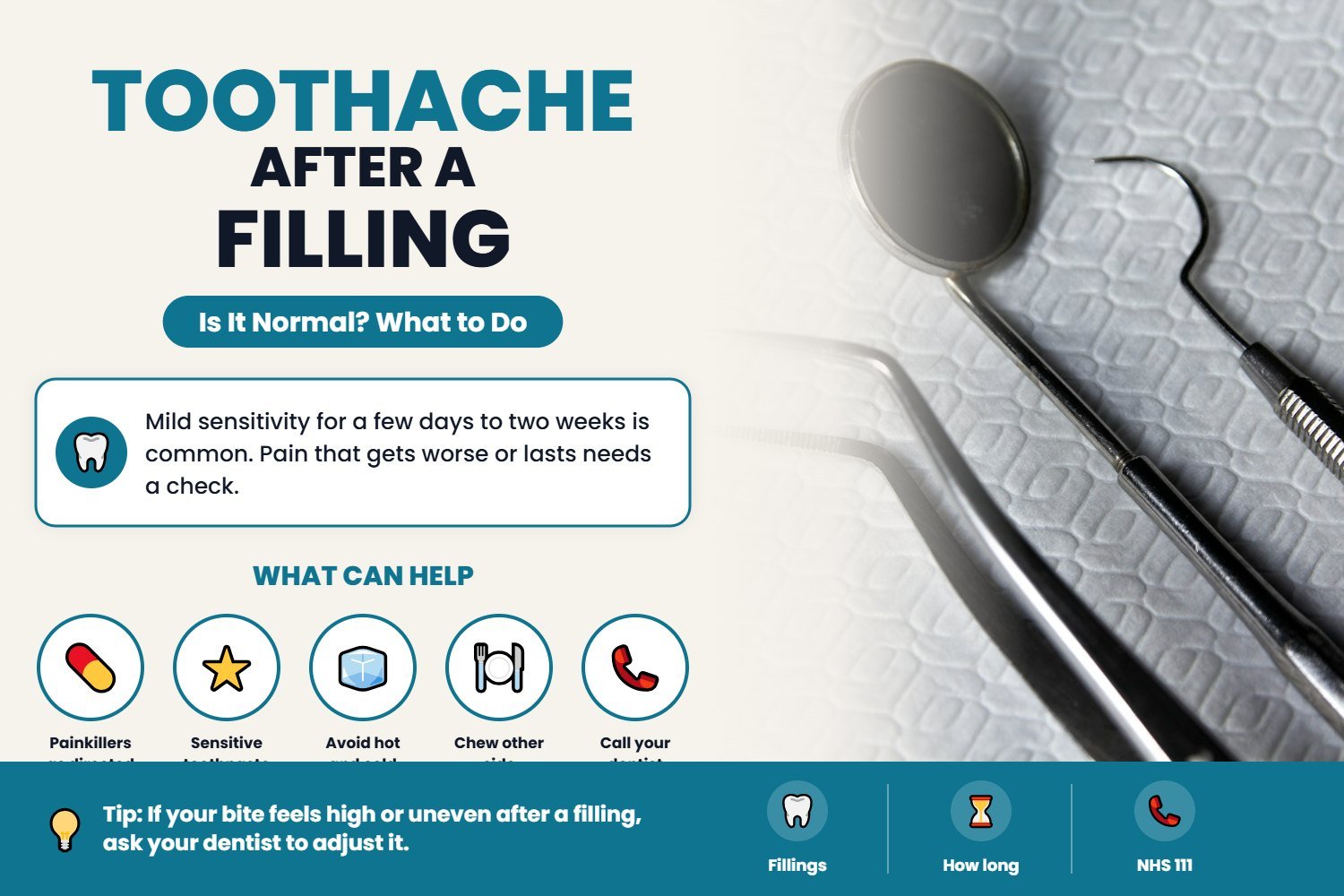
Mild sensitivity after a filling is common and usually fades within 2 weeks. To ease it, take paracetamol or ibuprofen as directed, use a toothpaste for sensitive teeth, and avoid very hot, cold or sweet foods. If your bite feels high, the pain gets worse, or it lasts more than 2 weeks, go back to your dentist.
Key Takeaways
- Sensitivity to hot and cold is the most common feeling after a filling.
- It usually fades within a few days to two weeks.
- Pain when biting often means the filling needs a small adjustment.
- Throbbing pain or swelling can be a sign of infection and needs urgent care.
- Your dentist can usually fix it quickly, so do not put up with it.
Is Toothache After a Filling Normal?
Yes, some discomfort is normal. During a filling, the dentist removes decay and cleans the tooth, which can irritate the nerve inside. Deeper fillings are more likely to cause sensitivity, because they are closer to the nerve. The gum around the tooth may also feel sore from the injection or from equipment used during treatment.
Normal vs Not Normal
| Usually normal | Not normal: contact your dentist |
|---|---|
| Mild sensitivity to hot, cold or sweet | Pain that gets worse instead of better |
| Discomfort that slowly improves | Pain lasting more than 2 weeks |
| Slight soreness in the gum or jaw | Sharp pain every time you bite |
| Tenderness around the injection site | Throbbing pain that keeps you awake |
| Mild ache for a few days after a deep filling | Swelling, a bad taste or a high temperature |
Common Causes of Pain After a Filling
❄️ Sensitive nerve
The nerve can be irritated after decay is removed, causing short twinges to hot and cold.
🦷 High filling
If the filling sits slightly too high, the tooth takes extra pressure when you bite.
⚡ Referred pain
Pain can sometimes be felt in nearby teeth, not just the one that was treated.
⚠️ Inflamed nerve (pulpitis)
Ongoing or worsening pain may mean the nerve is inflamed and needs further treatment.
How Long Does Pain Last After a Filling?
Most sensitivity improves within a few days and has gone within two weeks. Deeper fillings can take a little longer to settle. The key sign is the direction: if the pain is slowly getting better, it is usually healing. If it is staying the same or getting worse, book a check-up.
How to Ease Toothache After a Filling
- Take paracetamol or ibuprofen as directed on the packet. Ask a pharmacist if you are unsure which is safe for you.
- Brush with a toothpaste for sensitive teeth, and rub a little on the tooth before bed.
- Avoid very hot, cold, sweet and acidic foods and drinks for a few days.
- Chew on the other side of your mouth until the tooth settles.
- Use a soft toothbrush and brush gently around the filling.
Tip: If your bite feels uneven, or the tooth hurts as soon as you close your teeth together, ring your dentist. Adjusting a high filling takes only a few minutes and often stops the pain straight away.
When to Go Back to the Dentist
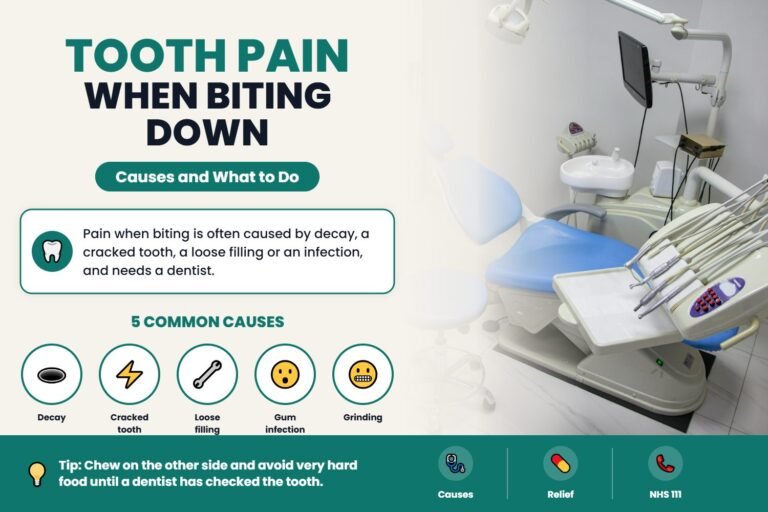
Contact your dentist if your bite feels high, the pain lasts more than two weeks, it is getting worse, or the filling feels rough, cracked or loose. Get urgent help from your dentist or NHS 111 if you have swelling, a high temperature, a bad taste in your mouth, or severe pain that painkillers do not ease. Our guide to tooth pain when biting down covers more causes of pain on biting.
Frequently Asked Questions
How long should a tooth hurt after a filling?
Mild sensitivity usually fades within a few days and should be gone within about two weeks.
Why does my tooth hurt when I bite after a filling?
The filling may be slightly too high. Your dentist can adjust it quickly.
Is throbbing pain after a filling normal?
Throbbing pain that gets worse is not normal and can be a sign the nerve is inflamed. Contact your dentist.
Can a filling cause pain in other teeth?
Yes. Pain can sometimes be felt in nearby teeth, which is called referred pain.
What should I avoid after a filling?
Avoid very hot, cold, sweet and hard foods for a few days, and do not chew on the numb side until the anaesthetic wears off.
Final Thoughts
A little sensitivity after a filling is normal and usually settles within two weeks. Painkillers, sensitive toothpaste and avoiding extreme temperatures can help in the meantime. If the pain gets worse, lasts longer, or your bite feels high, go back to your dentist, and get urgent help if you notice swelling or a fever.