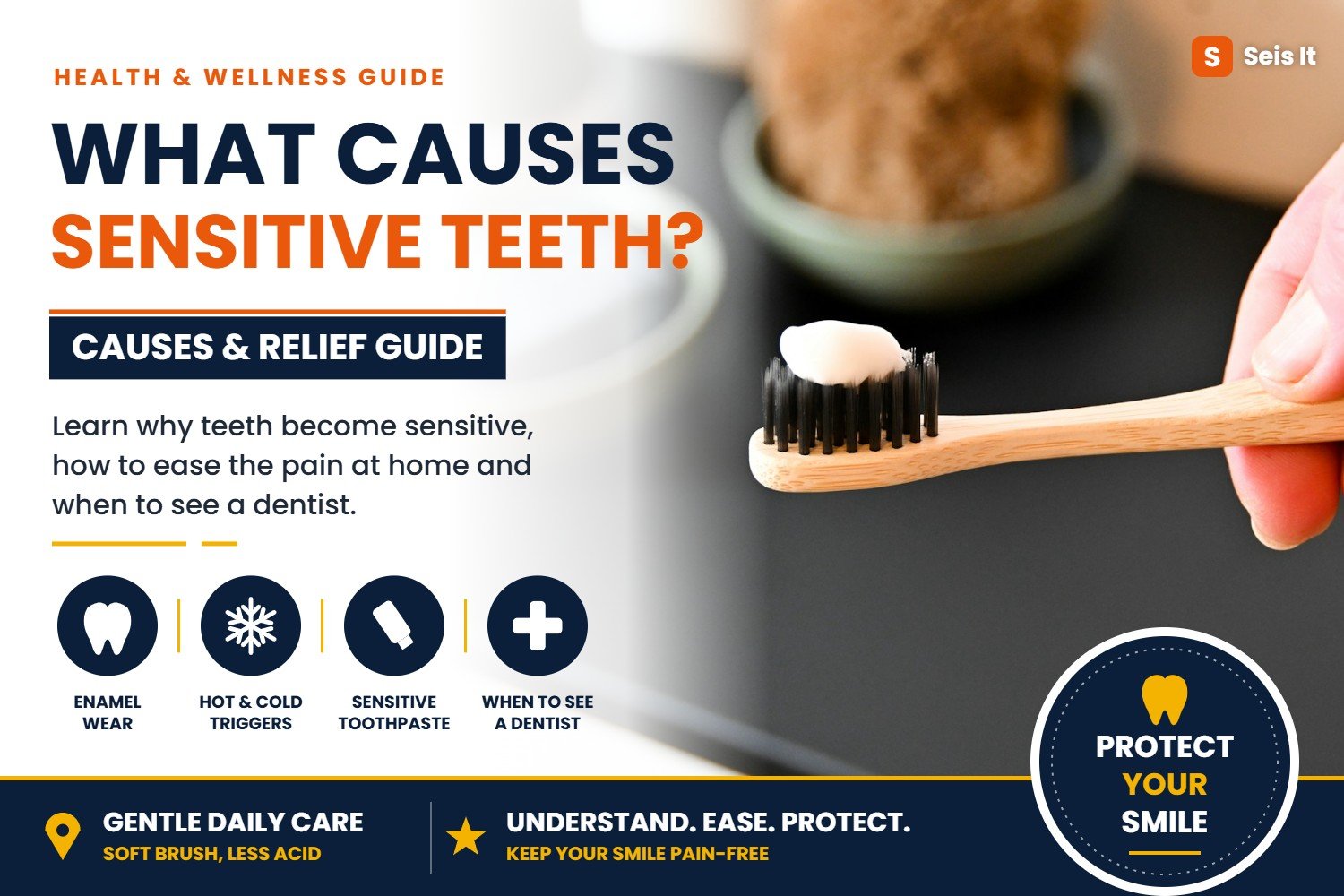
What Causes Sensitive Teeth? Causes, Relief and When to See a Dentist
A sudden, sharp twinge when you sip a cold drink, bite into ice cream or brush your teeth is one of the most common dental complaints. Sensitive teeth can range from a brief zing to a lingering ache, and while the problem is usually manageable, it can also be a sign that something needs a dentist’s attention.
This guide explains what causes sensitive teeth, how to tell everyday sensitivity from a bigger problem, what you can do at home and when to book a dental appointment. If your pain is more intense or throbbing, see our guide to tooth nerve pain relief.
This article is for general information only and is not a substitute for advice from a dentist.
The Short Answer
- What happens: the hard outer enamel wears away or the gums shrink back, exposing the softer dentine underneath, which connects to the tooth’s nerve.
- Most common causes: brushing too hard, gum recession, acid wear from food and drink, tooth grinding, gum disease and cracked teeth.
- What helps: a toothpaste made for sensitive teeth, a soft toothbrush and fewer acidic drinks.
- See a dentist if: the pain is severe, starts suddenly, lasts more than a few weeks or affects only one tooth.
Why Do Teeth Become Sensitive?
Each tooth has a hard protective layer of enamel on the outside, with a softer layer called dentine underneath. Dentine contains thousands of tiny channels that lead to the nerve in the centre of the tooth. When enamel wears thin or gums pull back from the tooth, the dentine is exposed. Hot, cold, sweet or acidic things can then reach the nerve through those channels and trigger a short, sharp pain.
What Causes Sensitive Teeth?
1. Brushing Too Hard
Scrubbing hard or using a firm toothbrush can wear enamel away over time, especially near the gumline, and can also push the gums back.
2. Gum Recession
As gums shrink back, the root of the tooth is exposed. Roots are not covered by enamel, so they are especially sensitive. Gum recession becomes more common with age.
3. Acid Wear (Dental Erosion)
Fizzy drinks, fruit juices, citrus fruits, wine and vinegar can soften and dissolve enamel. Stomach acid from acid reflux or frequent vomiting can cause the same damage.
4. Brushing Straight After Acidic Food or Drink
Acid temporarily softens enamel. Brushing immediately afterwards can brush away the softened layer, so it is better to wait at least an hour.
5. Gum Disease
Gum disease can cause the gums to pull away from the teeth and damage the tissues that support them, leaving the roots exposed.
6. Grinding or Clenching
Grinding your teeth, often at night without realising, wears down the enamel and can cause small cracks.
7. Cracked Teeth or Worn Fillings
A crack or a leaking filling can let hot and cold reach the inner tooth. Sensitivity in just one tooth is often a sign of this kind of problem.
8. Tooth Whitening
Whitening treatments commonly cause short-term sensitivity, which usually settles once the treatment ends.
Sensitive Teeth Causes at a Glance
| Cause | Typical sign | What usually helps |
|---|---|---|
| Brushing too hard | Worn areas near the gumline | Soft brush, gentle circular brushing |
| Gum recession | Teeth look longer, roots visible | Sensitive toothpaste, dentist check |
| Acid wear | Teeth look smooth, glassy or yellower | Fewer acidic drinks, wait before brushing |
| Grinding | Flat, worn biting edges, morning jaw ache | Dentist may suggest a night guard |
| Cracked tooth or filling | Pain in one tooth when biting | See a dentist |
| Whitening | Sensitivity during or after treatment | Usually settles on its own |
How to Ease Sensitive Teeth at Home
- Use a toothpaste for sensitive teeth. Look for ingredients such as potassium nitrate, potassium citrate or stannous fluoride, and keep using it, as the effect builds up over time and fades if you stop.
- Spit, don’t rinse. After brushing, spit out the toothpaste but do not rinse with water, so the active ingredients stay on your teeth for longer.
- Rub toothpaste on sore spots. At night, rubbing a little sensitive toothpaste on the affected area and leaving it on can help.
- Switch to a soft toothbrush. Brush gently with small circular movements rather than scrubbing.
- Wait an hour after acidic food or drink before brushing.
- Cut down on acidic and sugary drinks, and use a straw for fizzy drinks and juices.
When to See a Dentist
Sensitive teeth are common, but you do not have to live with them. Book a dental appointment if:
- the pain is severe or comes on suddenly
- sensitivity lasts more than a few weeks despite using sensitive toothpaste
- only one tooth is affected
- you notice swelling, a bad taste, bleeding gums or pain when biting
These can be signs of decay, a cracked tooth, gum disease or an infection, which need treatment. If you are in the UK and do not have a regular dentist, you can find NHS dental services through the NHS website, or call NHS 111 for urgent advice.
What Can a Dentist Do?
- Apply a desensitising varnish or treatment to the sensitive area.
- Prescribe a high-fluoride toothpaste.
- Place a filling or bonding over worn areas near the gumline.
- Treat gum disease, replace a damaged filling or repair a cracked tooth.
- Recommend a mouth guard if you grind your teeth.
- In more serious cases, suggest root canal treatment.
Frequently Asked Questions
Can sensitive teeth go away on their own?
Mild sensitivity, such as after whitening, often settles on its own. Sensitivity caused by enamel wear or gum recession usually needs ongoing care, such as using sensitive toothpaste every day.
How long does sensitive toothpaste take to work?
Many people notice an improvement within a few days to a couple of weeks of regular use. You need to keep using it to keep the benefit.
Why is only one of my teeth sensitive?
Sensitivity in a single tooth can point to a specific problem such as decay, a crack or a worn filling. It is best to have it checked by a dentist.
Are sensitive teeth a sign of a cavity?
They can be, but not always. Sensitivity is often caused by worn enamel or gum recession. A dentist can tell the difference with an examination.
Which foods should I avoid with sensitive teeth?
Very hot or cold food and drink, fizzy drinks, citrus fruits and juices, and sugary snacks are the most common triggers.
Useful Official Links
This guide is general information, not medical advice. For trusted help, use:
- NHS: Toothache: official advice on tooth pain and when to see a dentist.
- NHS: Find a dentist: search for NHS dentists accepting new patients near you.
Final Thoughts
Sensitive teeth usually happen when enamel wears down or gums recede and expose the dentine underneath. Gentle brushing, a toothpaste for sensitive teeth and fewer acidic drinks help most people, but pain that is severe, sudden or limited to one tooth should always be checked by a dentist. For more on easing dental pain, read our guide to tooth nerve pain relief or browse our health and wellness guides.