Arrowroot vs Cornflour: Which Thickener Should You Use?
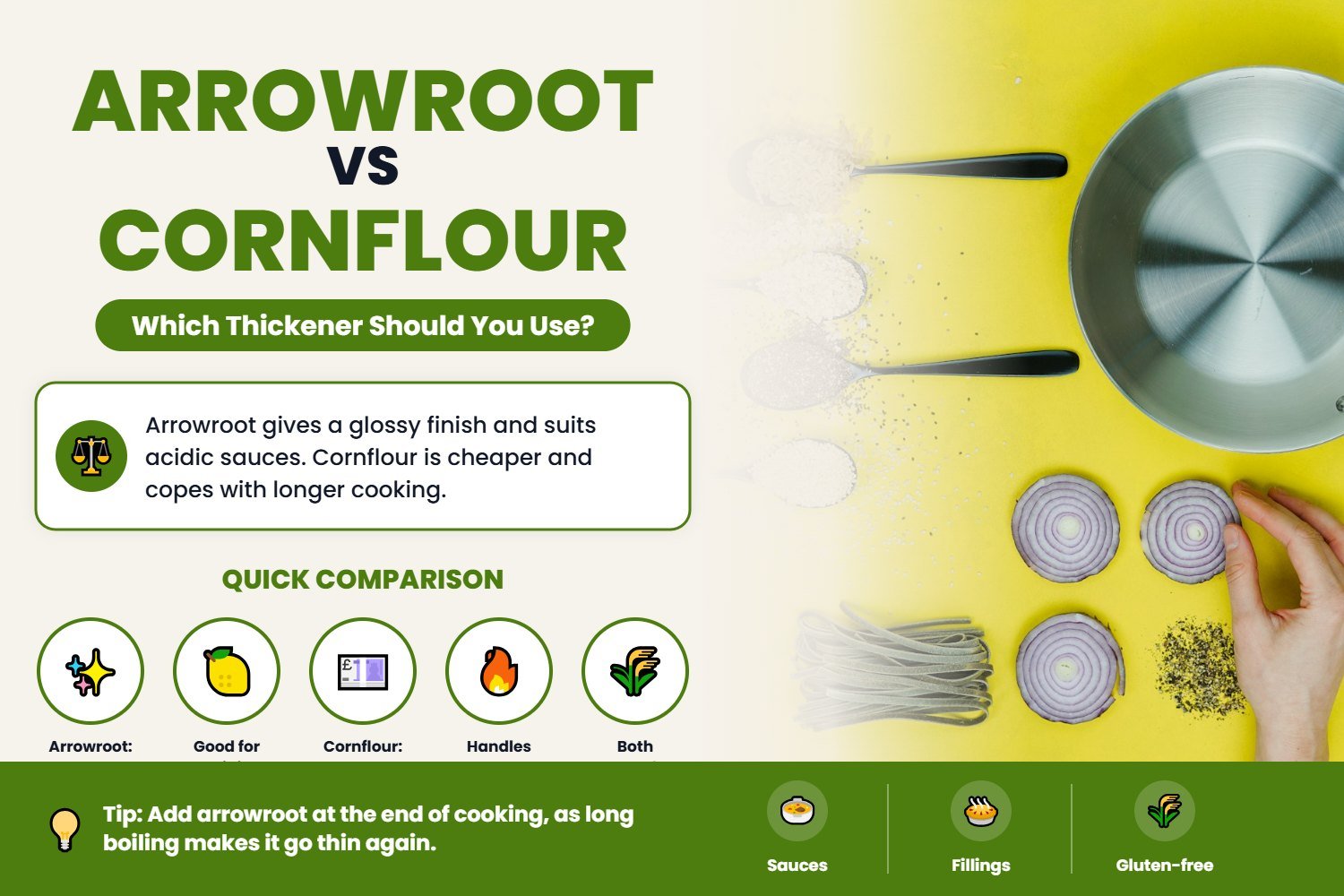
Arrowroot and cornflour are both gluten-free starches that thicken sauces, but they behave differently. Arrowroot thickens at a lower temperature, gives a clear, glossy finish and works well in acidic sauces and dishes that will be frozen. Cornflour is cheaper, easier to find in UK supermarkets and copes better with longer cooking, but it can look slightly cloudy and may go spongy when frozen.
Use arrowroot for fruit sauces, glazes, acidic sauces and anything you plan to freeze, and add it at the end of cooking. Use cornflour for gravy, stir-fries, pie fillings and custard, where it can simmer for a minute or two. Swap them 1 for 1 in most recipes. Both are gluten-free, but always check the label if you are cooking for someone with coeliac disease.
Key Takeaways
- Arrowroot gives a clear, glossy finish; cornflour can look slightly cloudy.
- Arrowroot works with acid such as fruit, lemon and tomato.
- Cornflour copes better with heat and longer cooking.
- Arrowroot freezes well; cornflour sauces can go spongy after freezing.
- Do not use arrowroot with dairy, as it can turn slimy.
Arrowroot vs Cornflour at a Glance
| Feature | Arrowroot | Cornflour |
|---|---|---|
| Made from | The root of the arrowroot plant | The starchy part of maize (corn) |
| Finish | Clear and glossy | Slightly cloudy, smooth |
| Thickens at | Lower temperature | Needs to simmer |
| With acidic food | Works well | Can weaken |
| With dairy | Can turn slimy | Works well |
| Freezing | Freezes well | Can go spongy |
| Long cooking | Breaks down if boiled long | Stable for a few minutes |
| Price and availability | More expensive, smaller packs | Cheap and in every supermarket |
| Gluten-free | Yes | Yes |
When to Use Arrowroot
🍓 Fruit sauces and pie fillings
Arrowroot keeps berries and fruit looking bright and glossy.
🍋 Acidic sauces
It holds up better than cornflour in sauces with lemon, vinegar or tomato.
❄️ Dishes to freeze
Sauces made with arrowroot stay smooth after freezing and thawing.
✨ Glazes
Use it for shiny glazes on fruit tarts, meat or vegetables.
When to Use Cornflour
Cornflour is the better everyday choice for gravy, stir-fry sauces, custard, cheese sauce and savoury pie fillings. It can simmer for a minute or two without breaking down, which makes it easier to control. It is also much cheaper. Read our guide on cornflour vs cornstarch if you are following an American recipe.
How to Use Each One
- Mix 1 tablespoon of arrowroot or cornflour with 2 tablespoons of cold water to make a smooth slurry.
- For cornflour, stir it into the simmering liquid and cook for 1 to 2 minutes until thick.
- For arrowroot, take the pan off the boil, stir the slurry in and heat gently for under a minute until it thickens.
- Do not keep boiling an arrowroot sauce, as it will thin again.
See our guide to what a slurry is in cooking for more slurry tips.
Tip: Arrowroot is slightly stronger than cornflour. If a recipe uses 1 tablespoon of cornflour, you can start with about 2 teaspoons of arrowroot and add more if needed.
Can You Substitute One for the Other?
Yes, in most recipes you can swap them about 1 for 1. Choose arrowroot when you want a glossy finish or are freezing the dish, and cornflour when the sauce contains milk or will cook for longer. Other swaps include potato starch and tapioca starch, which also give a glossy result.
Arrowroot and cornflour are naturally gluten-free, but some brands are packed where wheat is handled. Look for a gluten-free label if you are cooking for someone with coeliac disease.
Frequently Asked Questions
Is arrowroot better than cornflour?
Neither is better for everything. Arrowroot is best for glossy, acidic or frozen sauces, and cornflour is best for gravy, dairy sauces and longer cooking.
Can I use arrowroot instead of cornflour in gravy?
Yes, but add it at the end and do not let the gravy boil for long, or it may thin out again.
Why did my arrowroot sauce go slimy?
Arrowroot can turn slimy when mixed with dairy or cooked for too long. Use cornflour for milk-based sauces.
Is arrowroot gluten-free?
Yes. Arrowroot is naturally gluten-free, but check for a gluten-free label if you need to avoid cross-contamination.
Where can I buy arrowroot in the UK?
Most large supermarkets sell it in the baking aisle, and health food shops also stock it.
Final Thoughts
Arrowroot and cornflour both thicken quickly, but they suit different jobs. Reach for arrowroot for clear, glossy, acidic or frozen sauces, and cornflour for gravy, custard and dairy sauces. For a full guide to every thickener, see how to thicken any sauce, soup or gravy.