
What Is a Binder in Cooking? A Complete Guide
If you have ever followed a recipe for meatballs, burgers, meatloaf, veggie patties, or baked goods, you may have come across the term binder. But what is a binder in cooking, and why is it important?
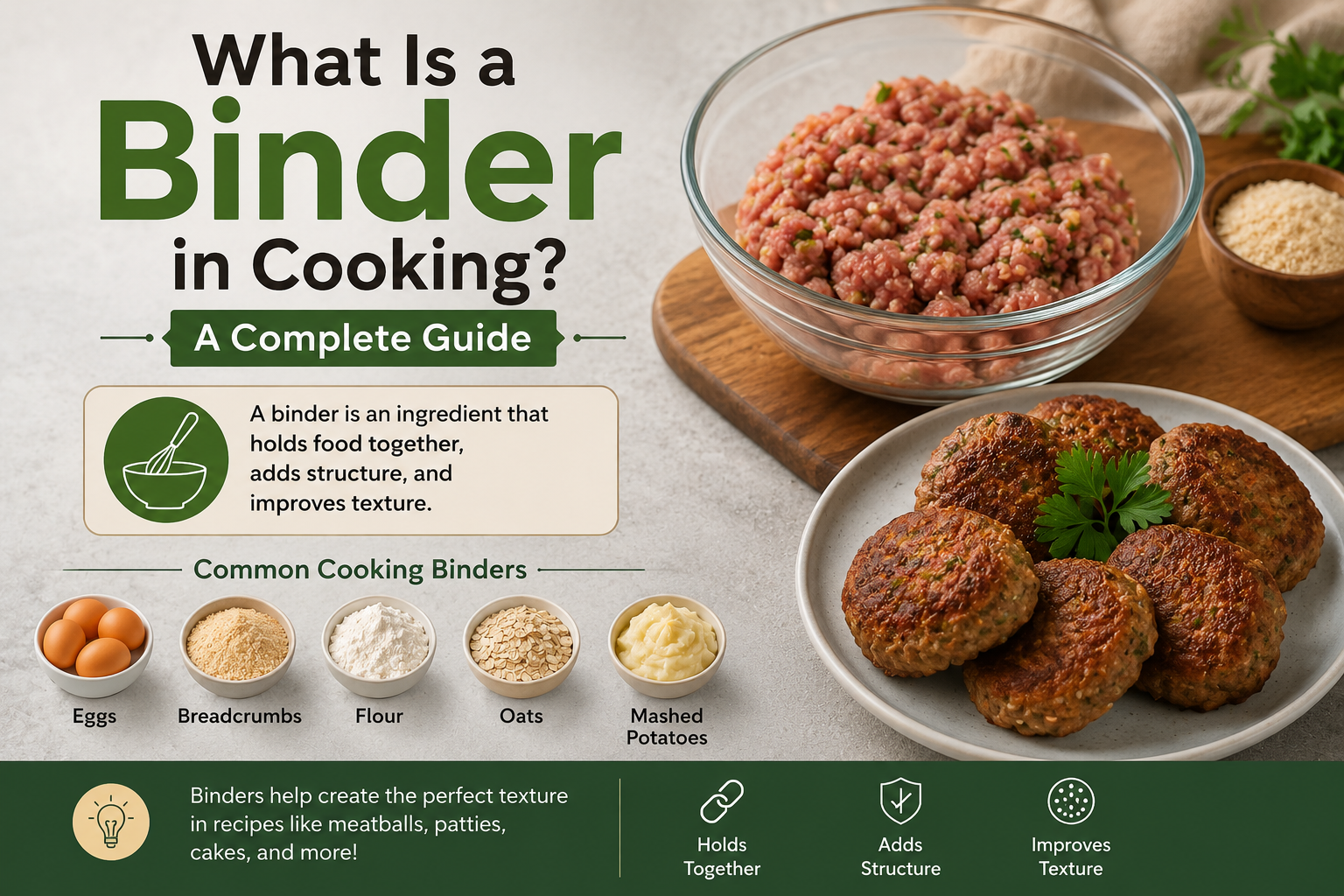
A binder is an ingredient that helps hold other ingredients together. It can improve the texture, shape, moisture, and stability of a dish. Depending on the recipe, common binders include eggs, breadcrumbs, flour, oats, cornstarch, gelatin, and mashed vegetables.
Understanding how binders work can help you prepare foods that hold their shape without becoming too dry, crumbly, or difficult to handle.
What Is a Binder in Cooking?
A binder in cooking is an ingredient used to help combine and hold other ingredients together.
For example, when making meatballs, ground meat alone may not always hold its shape properly. Adding an egg and breadcrumbs can help create a mixture that stays together during cooking.
Binders can work in different ways. Some absorb moisture, some form a gel, while others create a structure when heated.
Why Are Binders Used in Cooking?
Binders are commonly used to:
- Hold ingredients together
- Improve texture
- Prevent foods from falling apart
- Add moisture
- Absorb excess liquid
- Help mixtures maintain their shape
- Improve the consistency of recipes
The best binder depends on the type of food and the result you want.
Common Types of Binders in Cooking
There are many ingredients that can act as binders. Some are especially common in everyday recipes.
1. Eggs
Eggs are one of the most versatile binders in cooking.
When heated, the proteins in eggs set and help hold ingredients together. Eggs are commonly used in:
- Meatballs
- Meatloaf
- Burgers
- Vegetable patties
- Casseroles
- Baked dishes
Eggs can also add richness and moisture to certain recipes.
2. Breadcrumbs
Breadcrumbs are another popular binder, especially for meat-based dishes.
They absorb moisture from ingredients and help create a stable mixture. Breadcrumbs are frequently used in meatballs, meatloaf, croquettes, and vegetable patties.
For additional cooking information, you can internally link this section to a future article about different types of breadcrumbs and how to use them.
3. Flour
Flour can act as a binder in both savory and sweet recipes.
When combined with liquid and heated, flour can help thicken mixtures and create structure. It is commonly used in sauces, gravies, batters, doughs, and some patties.
Different types of flour can produce different textures, so choosing the appropriate flour is important.
4. Cornstarch
Cornstarch is particularly useful when you need to thicken liquids.
It can be mixed with a small amount of cold liquid before being added to a hot recipe. As it heats, the starch thickens the mixture.
Cornstarch is commonly used in:
- Sauces
- Gravies
- Soups
- Stir-fry sauces
- Pie fillings
- Desserts
5. Oats
Oats can work as a binder in recipes such as meatloaf, meatballs, and vegetable patties.
They absorb moisture and help give the mixture structure. Oats can also be useful when someone wants an alternative to traditional breadcrumbs.
6. Mashed Potatoes
Mashed potatoes can help bind ingredients together while also adding moisture and a soft texture.
They are sometimes used in vegetable patties, croquettes, and other recipes where a soft but cohesive mixture is desired.
7. Gelatin
Gelatin is another type of binder that can create a firm or gel-like texture.
It is commonly used in desserts, jellies, mousses, and certain cold preparations.
Because gelatin behaves differently from ingredients such as breadcrumbs or flour, it is generally selected when a recipe requires a specific texture.
What Is a Binder Used for in Meat Recipes?
Binders are particularly common in ground-meat recipes.
When ground meat is mixed with other ingredients, the mixture can sometimes become loose or crumble during cooking. A binder helps the ingredients stick together.
For example, a simple meatball mixture may contain:
- Ground meat
- Egg
- Breadcrumbs
- Seasonings
- Herbs
- Other ingredients
The egg helps provide structure while the breadcrumbs absorb moisture and contribute to the overall texture.
What Is a Binder in Baking?
In baking, binders help ingredients combine and contribute to the structure of the finished product.
Eggs are one of the most important examples. They can help connect ingredients while also contributing moisture, richness, and structure.
Other ingredients can also perform binding functions, including:
- Flour
- Starches
- Ground flaxseed
- Chia seeds
- Nut butters
- Mashed bananas
- Applesauce
The right choice depends on the recipe.
What Can I Use Instead of Eggs as a Binder?
If a recipe calls for eggs but you do not want to use them, several alternatives can work depending on the dish.
Common egg substitutes include:
Ground Flaxseed
Ground flaxseed mixed with water can create a thick mixture that works as a binder in some baked goods and patties.
Chia Seeds
Chia seeds can absorb water and form a gel-like consistency, making them useful in certain recipes.
Mashed Banana
Mashed banana can provide binding and moisture in some baked recipes. However, it also adds sweetness and banana flavor.
Applesauce
Applesauce can help bind ingredients and add moisture to some baked goods.
Mashed Vegetables
Mashed potatoes, pumpkin, or other soft vegetables can help hold certain mixtures together.
How Do You Choose the Right Binder?
Choosing a binder depends on what you are cooking and the texture you want.
For Meatballs and Meatloaf
Eggs and breadcrumbs are common choices because they help create a cohesive mixture.
For Vegetable Patties
Breadcrumbs, oats, flour, eggs, or mashed vegetables can work depending on the ingredients.
For Sauces
Cornstarch and flour are common choices when the goal is thickening rather than physically holding solid ingredients together.
For Baking
Eggs, flour, starches, fruit purees, and seed-based substitutes can provide binding and structure.
Binder vs. Thickener: Are They the Same?
Binders and thickeners can sometimes overlap, but they are not always the same thing.
A binder primarily helps ingredients stick together or maintain their structure.
A thickener primarily increases the viscosity of a liquid or sauce.
For example, breadcrumbs can bind a meatball mixture, while cornstarch can thicken a sauce.
However, some ingredients can perform both functions depending on how they are used.
Can You Use Too Much Binder?
Yes. Using too much binder can negatively affect the texture of a dish.
For example, too many breadcrumbs in meatballs can make them dense or dry. Too much flour can make a mixture heavy, while excessive cornstarch can make a sauce overly thick.
For the best results, follow the recipe’s recommended proportions and adjust gradually when experimenting.
Tips for Using Binders in Cooking
Here are some simple tips to get better results:
- Choose a binder based on the recipe.
- Do not automatically use eggs for every dish.
- Add dry binders gradually.
- Give absorbent ingredients time to hydrate when necessary.
- Avoid using excessive amounts.
- Consider how the binder affects flavor and texture.
- Test a small portion before cooking the entire mixture.
Frequently Asked Questions
What is a binder in cooking?
A binder is an ingredient that helps hold other ingredients together and gives a recipe structure. Common examples include eggs, breadcrumbs, flour, oats, and certain starches.
What is the most common binder in cooking?
Eggs and breadcrumbs are among the most common binders, particularly in recipes such as meatballs, meatloaf, patties, and other mixtures.
Are breadcrumbs a binder?
Yes. Breadcrumbs can absorb moisture and help hold ingredients together, making them a popular binder for meatballs, meatloaf, and patties.
Can flour be used as a binder?
Yes. Flour can help bind ingredients and provide structure. It is also commonly used as a thickener for sauces and gravies.
What can I use instead of eggs as a binder?
Depending on the recipe, alternatives can include ground flaxseed, chia seeds, mashed banana, applesauce, mashed potatoes, or other suitable ingredients.
Is a binder the same as a thickener?
Not exactly. A binder generally helps ingredients stick together, while a thickener increases the thickness of a liquid. Some ingredients can perform both roles.
Internal Linking Opportunities
As you publish more cooking content on your website, add internal links naturally around relevant sections. Good future articles to link to include:
- How to Make Homemade Breadcrumbs
- Best Egg Substitutes for Baking
- How to Thicken a Sauce
- Different Types of Flour and Their Uses
- How to Make Perfect Meatballs
- Cooking Tips for Beginners
For example:
If you are making meatballs, choosing the right breadcrumbs can make a noticeable difference in texture.
Once the related article exists, the word breadcrumbs can link directly to it.
Conclusion
So, what is a binder in cooking? A binder is an ingredient that helps hold other ingredients together and provides structure to a recipe.
Eggs, breadcrumbs, flour, oats, cornstarch, gelatin, and mashed vegetables can all serve as binders in different situations. The best choice depends on whether you are preparing meatballs, patties, sauces, baked goods, or another type of dish.
Understanding how different binders work makes it easier to adjust recipes, find substitutions, and achieve the texture you want in your cooking.