
Warm White vs Cool White vs Daylight Bulbs: Which Should You Use?
Choosing between warm white and cool white bulbs changes how a room looks and feels far more than most people expect. The same living room can feel cosy and relaxing under one bulb, and bright, clinical and slightly cold under another. The difference comes down to one number printed on the box: the colour temperature, measured in Kelvin.
This guide explains what warm white and cool white actually mean, how to read the Kelvin scale, which colour suits each room in your home and what else to check before you buy. If you are planning new lighting without rewiring, our plug-in wall lamp buying guide is a good place to start.
The Short Answer
- Warm white (2700K to 3000K) gives a soft, yellowish glow. Use it in living rooms, bedrooms and dining rooms.
- Cool white (around 4000K) gives a crisp, neutral-to-bluish light. Use it in kitchens, bathrooms, home offices and utility spaces.
- Daylight (5000K to 6500K) looks like bright midday light. It suits garages, workshops and detailed tasks.
- Simple rule: warm light for relaxing, cooler light for working.
What Is Colour Temperature?
Colour temperature describes the colour of the light a bulb gives off, measured in Kelvin (K). It has nothing to do with how hot the bulb gets. The lower the number, the warmer and more yellow the light looks; the higher the number, the cooler and bluer it appears.
Most household bulbs fall between about 2200K and 6500K. Traditional incandescent bulbs gave off a warm light of around 2700K, which is why many people find that colour the most familiar and comfortable at home.
Warm White vs Cool White at a Glance
| Name | Kelvin | How it looks | Best rooms |
|---|---|---|---|
| Extra warm white | 2200K to 2500K | Deep amber, like candlelight | Bedrooms, accent lamps, outdoor seating |
| Warm white | 2700K to 3000K | Soft, golden and cosy | Living rooms, bedrooms, dining rooms |
| Neutral white | 3500K | Balanced and clean | Kitchens, hallways, home offices |
| Cool white | 4000K | Crisp with a slight blue tint | Kitchens, bathrooms, workspaces, utility rooms |
| Daylight | 5000K to 6500K | Bright, like midday sun | Garages, workshops, task lighting |
When to Choose Warm White
Warm white creates a relaxed, welcoming atmosphere and flatters skin tones, wood, fabrics and warm paint colours. It is the best choice for rooms where you unwind in the evening.
- Living rooms: 2700K creates a cosy feel for watching TV or reading.
- Bedrooms: warm light helps the room feel calm at the end of the day. Many people choose 2700K or warmer for bedside lamps.
- Dining rooms: warm light makes food and faces look their best.
- Lamps and wall lights: warm white is the natural choice for decorative and ambient lighting, including plug-in wall lamps.
When to Choose Cool White
Cool white light looks crisp and clear, which makes it easier to see detail and colour accurately. It works best in rooms where you need to concentrate or complete tasks.
- Kitchens: 3500K to 4000K helps with food preparation, especially over worktops.
- Bathrooms: cool white around the mirror gives clearer light for shaving or make-up.
- Home offices: cooler light can help you stay alert while working.
- Utility rooms and garages: cool white or daylight bulbs make these practical spaces bright and functional.
Can You Mix Warm and Cool White?
You can, but it needs care. Mixing very different colour temperatures in the same room can look patchy, with some areas looking yellow and others looking blue. A good approach is to keep one colour temperature for the main light in each room and use warmer lamps for accent lighting. In open-plan spaces, many people use neutral white (around 3500K) over the kitchen area and warm white in the living area.
Other Things to Check on the Box
Lumens, Not Watts
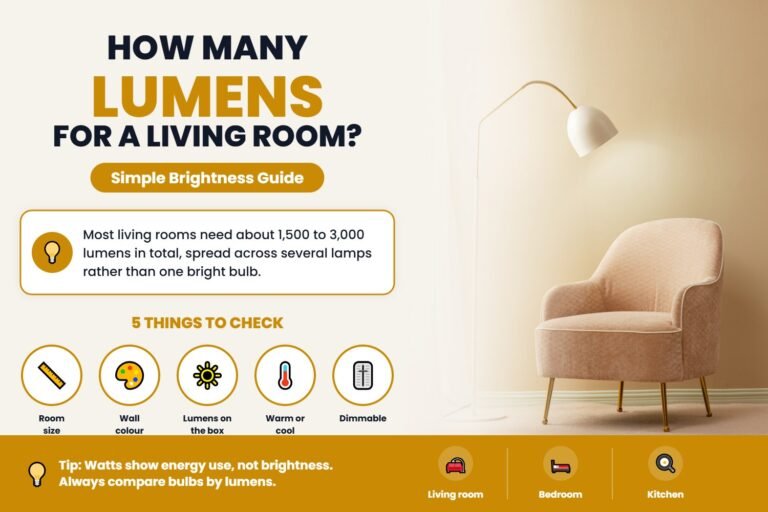
Brightness is measured in lumens, not watts. With LED bulbs using far less power than old incandescent bulbs, watts no longer tell you how bright a bulb is. As a rough guide, around 800 lumens gives similar brightness to an old 60W bulb.
Colour Rendering Index (CRI)
CRI measures how accurately a bulb shows colours, on a scale up to 100. A CRI of 80 is standard for home use, while 90 or above gives more natural-looking colours, which is useful in kitchens, bathrooms and dressing areas.
Dimmable or Not
Not every LED bulb works with a dimmer switch. If your light has a dimmer, check that the bulb is labelled dimmable to avoid flickering or buzzing.
Smart and Tunable Bulbs
Smart bulbs with “tunable white” let you change the colour temperature from an app or voice assistant, so you can have cooler light while you work and warmer light in the evening from the same fitting.
Common Mistakes to Avoid
- Using daylight bulbs in a living room or bedroom, which can make the space feel cold and harsh.
- Buying by watts instead of lumens and ending up with a room that is too dim or too bright.
- Mixing different colour temperatures in the same light fitting.
- Choosing a non-dimmable bulb for a dimmer switch.
Warm White vs Daylight Bulbs: What Is the Difference?
Here is how warm white, cool white and daylight bulbs compare side by side.
| Bulb colour | Kelvin | Looks like | Best rooms |
|---|---|---|---|
| Warm white | 2700K to 3000K | Soft, yellowish and cosy | Living room, bedroom, dining room |
| Cool white | 3500K to 4500K | Bright, neutral white | Kitchen, bathroom, home office, garage |
| Daylight | 5000K to 6500K | Very white with a slight blue tint | Workshops, craft areas, reading lamps, make-up mirrors |
Warm white bulbs (2700K to 3000K) give a soft, yellowish light that feels cosy and relaxing. Daylight bulbs (5000K to 6500K) give a bright, bluish-white light that looks like natural daylight. Use warm white in living rooms and bedrooms, and daylight in garages, utility rooms, home offices and anywhere you need to see fine detail.
Many bulb boxes in the UK use three names: warm white, cool white and daylight. Cool white sits in the middle at around 4000K, while daylight is the coolest and bluest of the three. The higher the Kelvin (K) number, the cooler and bluer the light looks.
| Bulb colour | Kelvin | How it looks | Best rooms |
|---|---|---|---|
| Warm white | 2700K to 3000K | Soft, yellowish and cosy | Living rooms, bedrooms, dining rooms |
| Cool white | 3500K to 4500K | Neutral, crisp white | Kitchens, bathrooms, hallways |
| Daylight | 5000K to 6500K | Bright, bluish-white, like midday sun | Garages, home offices, craft and make-up areas |
Tip: Daylight bulbs can make a living room feel cold and clinical in the evening. If you want bright light for reading but a relaxing feel, choose a warm white bulb with more lumens instead of switching to daylight.
Frequently Asked Questions
Is daylight or warm white better?
Neither is better for every room. Warm white is best for relaxing rooms such as living rooms and bedrooms, while daylight is better for tasks that need bright, clear light, such as working, crafts or a garage.
Is warm white or cool white better for the eyes?
Neither is harmful for everyday use. Warm white is usually more comfortable for relaxing in the evening, while cool white makes reading and detailed tasks easier because it improves contrast.
What Kelvin is warm white?
Warm white is usually 2700K to 3000K. Anything below 2700K is often labelled extra warm white.
What Kelvin is cool white?
Cool white is usually around 4000K. Bulbs from 5000K to 6500K are normally sold as daylight.
Which colour temperature is best for a bedroom?
Warm white of 2700K or lower is the most popular choice for bedrooms because it creates a calm, restful atmosphere.
Does colour temperature affect energy use?
No. Energy use depends on the bulb’s wattage and efficiency, not its colour. A warm white and a cool white LED with the same wattage use the same amount of electricity.
Final Thoughts
The choice between warm white and cool white comes down to how you use each room. Choose warm white for living rooms, bedrooms and dining spaces where you want to relax, and cool white for kitchens, bathrooms and workspaces where you need clear, bright light. Check the Kelvin, lumens and CRI on the box, and you will get lighting that looks right every time. For more ideas, see our plug-in wall lamp guide or browse all our home and decor guides.