
How to Light a Room Without Ceiling Lights: 6 Easy Ideas
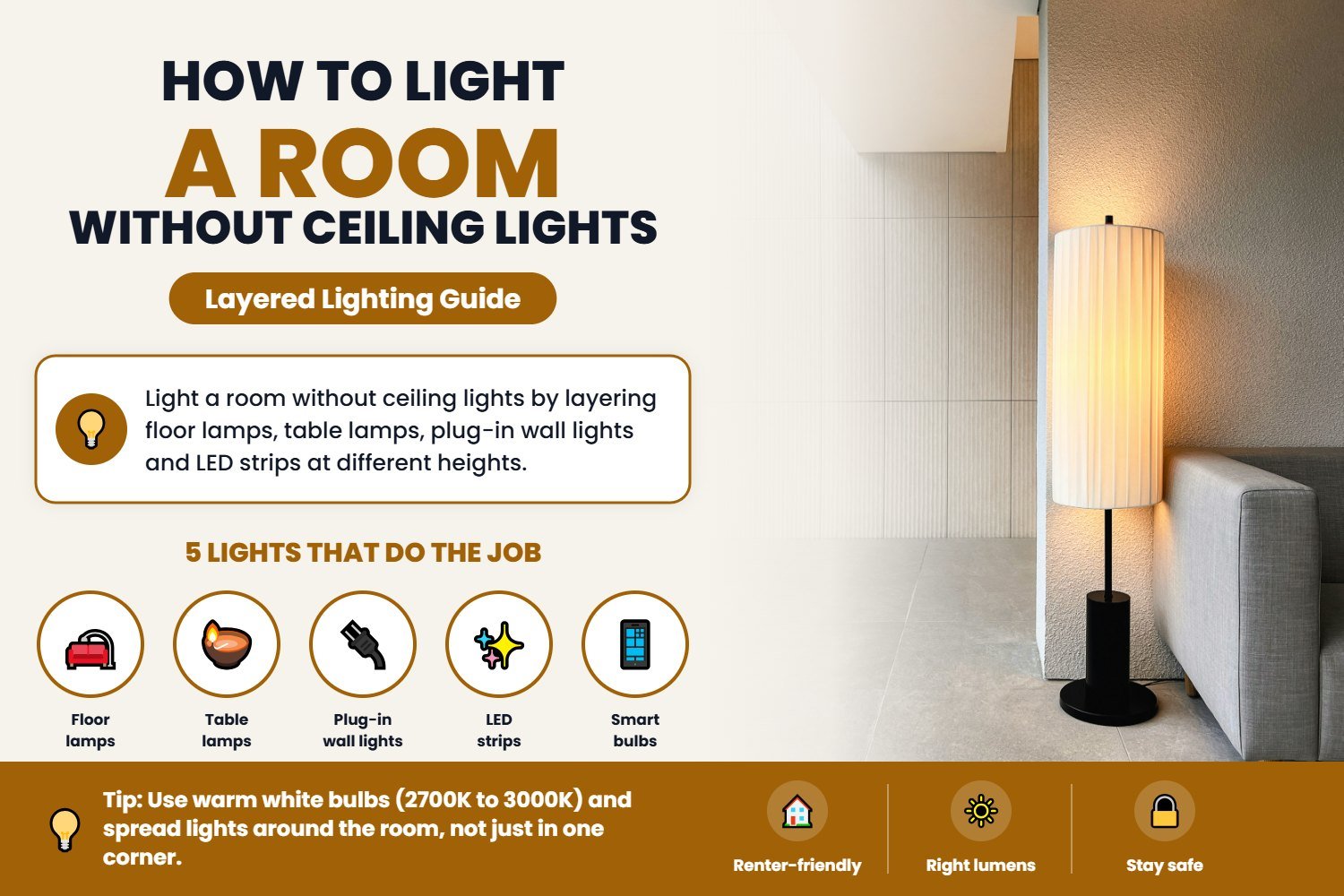
You can light a room without ceiling lights by layering plug-in lighting at different heights: floor lamps for general light, table lamps for warm pools of light, plug-in wall lights for reading and LED strips or picture lights for accent. Use warm white bulbs and spread the lights around the room, and the space will feel brighter and cosier than it would under a single ceiling light.
This guide explains how much light you need, the best types of lamps, ideas for each room and how to stay safe with plugs and extension leads. Every idea here is renter-friendly, with no electrician needed.
The Short Answer
- Use at least three light sources: for example, a floor lamp, a table lamp and a wall or accent light.
- Mix heights: combine high, middle and low lights so the room has no dark corners.
- Choose the right bulbs: warm white (2700K to 3000K) for living rooms and bedrooms, cooler white for desks and kitchens.
- Get enough brightness: a typical living room needs roughly 1,500 to 3,000 lumens in total, spread across several lamps.
- Stay safe: do not overload extension leads and keep cables away from walkways.
Why Layered Lighting Works Better
Designers often avoid relying on a single ceiling light because it casts flat light and harsh shadows. Instead, they use three layers of light:
- Ambient light: the general light that lets you move around the room safely, usually from floor lamps or uplighters.
- Task light: focused light for reading, working or cooking, such as a desk lamp or swing-arm wall light.
- Accent light: softer light that highlights pictures, shelves or plants and adds atmosphere.
When you light a room without ceiling lights, you build these layers with plug-in lamps instead. The result is usually warmer, more flexible and easier to adjust for different times of day.
How Much Light Do You Need?
Brightness is measured in lumens, not watts. A standard 60-watt-equivalent LED bulb gives about 800 lumens. Use this table as a rough guide for the total light in a room:
| Room | Approximate total lumens | Best colour temperature |
|---|---|---|
| Living room | 1,500 to 3,000 | Warm white, 2700K to 3000K |
| Bedroom | 1,000 to 2,000 | Warm white, 2700K |
| Home office or desk | 3,000 to 6,000 | Neutral white, 3500K to 4000K |
| Kitchen | 4,000 to 8,000 | Neutral or cool white, 3500K to 4000K |
| Hallway | 500 to 1,000 | Warm white, 2700K to 3000K |
If you are unsure which colour of bulb to choose, our guide to warm white vs cool white bulbs explains the difference in detail.
The Best Lights for a Room Without Ceiling Lights
Floor lamps
A floor lamp is the easiest way to replace a ceiling light. An uplighter that throws light towards the ceiling bounces it around the room and gives soft, even light. An arc floor lamp can hang over a sofa or dining table, almost like a pendant light. Place floor lamps in corners to brighten the darkest parts of the room.
Table lamps
Table lamps add warm pools of light at a lower level. Put them on side tables, sideboards, bedside tables or a console table behind the sofa. A pair of matching lamps on either side of a sofa or bed creates a balanced look.
Plug-in wall lights
Plug-in wall lights, also called plug-in sconces, give you the look of wall lights without any rewiring. Swing-arm styles are ideal for reading in bed or in an armchair. Read our plug-in wall lamp buying guide for tips on styles, brightness and hiding the cable.
LED strip lights
LED strips are thin, flexible lights that you can stick under kitchen cabinets, behind a TV, along shelves or around a mirror. They add a soft glow and make a room feel larger. Many plug into a USB port or a normal socket.
Picture lights and accent lamps
Small battery or plug-in picture lights draw attention to artwork, while mini lamps on bookshelves add depth. Rechargeable cordless lamps are useful where there is no socket, such as on a dining table or a shelf.
Smart bulbs and plugs
Smart bulbs let you change brightness and colour from your phone, and smart plugs can switch ordinary lamps on and off on a schedule. You can even turn on several lamps at once when you walk into the room, just like a ceiling light switch.
Room-by-Room Ideas
- Living room: place a floor lamp in one corner, a table lamp on the opposite side and an LED strip behind the TV. Add a reading lamp next to your favourite chair.
- Bedroom: use bedside table lamps or swing-arm wall lights, plus a floor lamp or fairy lights for general light.
- Home office: combine a bright desk lamp with a floor uplighter so you are not working in a pool of light surrounded by darkness.
- Kitchen: stick LED strips under wall cabinets to light the worktops, and add a small table lamp for a softer evening mood.
- Hallway: a slim console table with a lamp, or plug-in wall lights, can make a dark hallway feel welcoming.
Tips to Make a Room Feel Brighter
- Paint walls and ceilings in light colours, which reflect more light.
- Hang a large mirror opposite a lamp or window to bounce light around.
- Choose lampshades in white, cream or linen rather than dark fabrics.
- Keep lamps away from walls by a few centimetres so light spreads further.
- Use the same colour temperature in every bulb so the room looks consistent.
Safety Tips for Plug-In Lighting
More lamps usually mean more plugs, so it is important to use them safely:
- Do not overload sockets or extension leads. Electrical Safety First has a free online calculator to check whether your extension lead is overloaded.
- Never plug one extension lead into another.
- Keep cables out of walkways and away from rugs to avoid trips and overheating.
- Use LED bulbs, which stay much cooler than old incandescent bulbs.
- Buy lamps and LED strips from reputable UK retailers and look for the UKCA or CE mark.
Frequently Asked Questions
How do you light a room with no ceiling light?
Use several plug-in lights at different heights: a floor lamp for general light, table lamps for warmth, wall lights for reading and LED strips for accent. Spread them around the room rather than putting them all in one place.
How many lamps do you need in a room without ceiling lights?
Most rooms need at least three light sources. A typical living room usually looks best with four or five lamps of different types.
What is the brightest lamp for a dark room?
A floor uplighter with a bright LED bulb gives the most general light, because it bounces light off the ceiling and spreads it around the room.
Can I add lights without an electrician?
Yes. Floor lamps, table lamps, plug-in wall lights, LED strips, rechargeable lamps and smart bulbs all work without any rewiring.
What colour light is best for a living room?
Warm white bulbs, around 2700K to 3000K, create a relaxing and cosy atmosphere that suits living rooms and bedrooms.
Final Thoughts
A room without ceiling lights can look better than one with them. Layer floor lamps, table lamps, wall lights and LED strips at different heights, choose warm white bulbs with enough lumens and spread the light around the room. Keep safety in mind with every plug and extension lead. For more home ideas, read our plug-in wall lamp buying guide or browse all our home and decor guides.