2700K vs 3000K: Which Warm White Bulb Is Best?
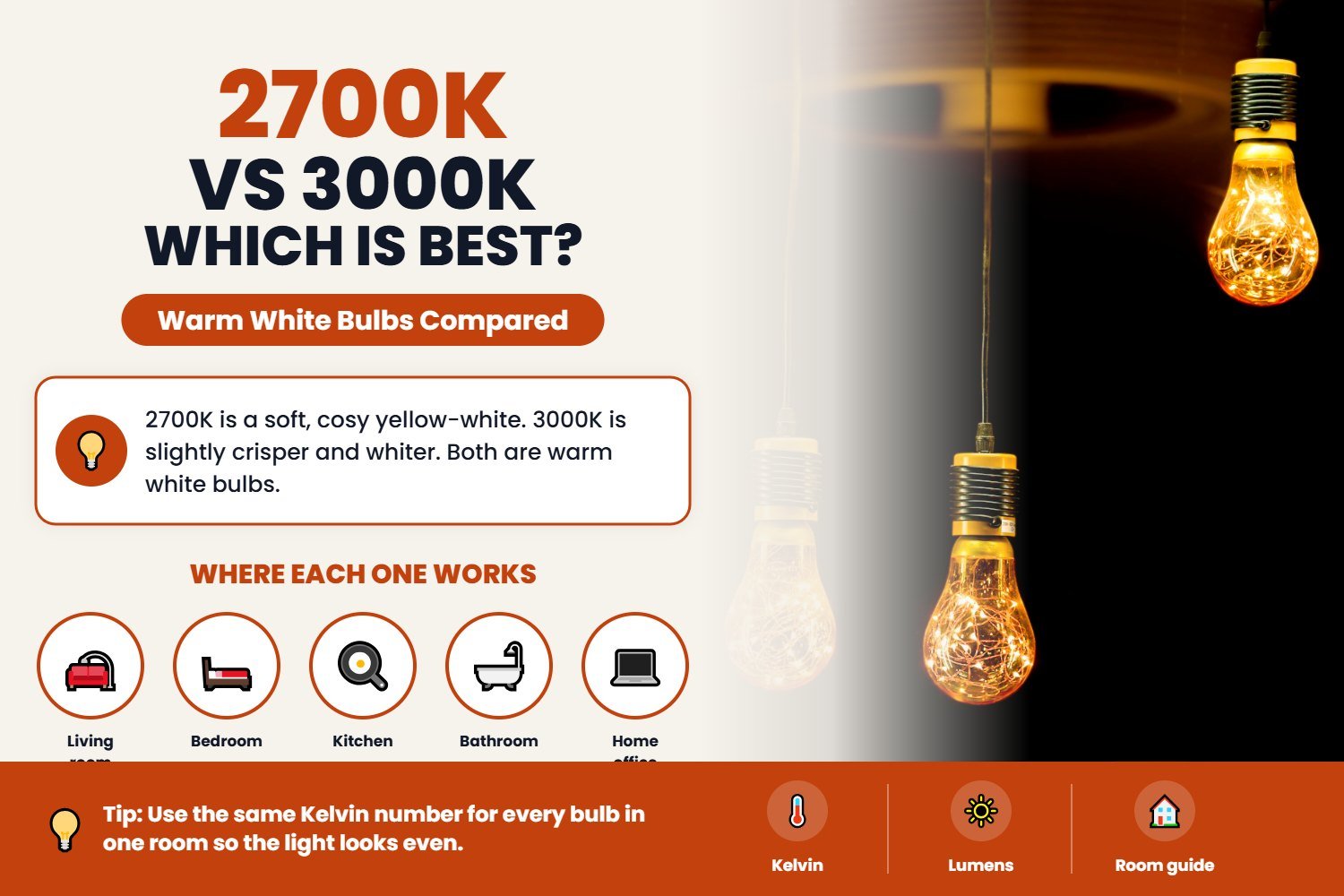
2700K and 3000K bulbs are both warm white, but 2700K gives a softer, more yellow and cosy light, similar to old incandescent bulbs, while 3000K is slightly whiter and crisper, closer to halogen light. Choose 2700K for living rooms and bedrooms where you want to relax, and 3000K for kitchens, bathrooms and hallways where you want light that feels a little cleaner.
2700K is the warmest, cosiest white and suits living rooms, bedrooms and dining rooms. 3000K is a slightly crisper warm white that suits kitchens, bathrooms, hallways and home offices. The difference is small but noticeable side by side, so use one colour per room and keep it the same in every bulb.
Key Takeaways
- Both are warm white; 3000K is just a little whiter.
- 2700K matches the glow of traditional incandescent bulbs.
- 3000K feels cleaner and works well with white kitchens and bathrooms.
- Kelvin is colour, not brightness; check lumens for brightness.
- Never mix 2700K and 3000K bulbs in the same room.
What Does Kelvin Mean on a Light Bulb?
Kelvin (K) measures the colour of light. Lower numbers give warmer, more yellow light, and higher numbers give cooler, bluer light. Most UK bulb boxes group colours into warm white (2700K to 3000K), cool or neutral white (around 4000K) and daylight (5000K to 6500K). For a full overview, see our guide to warm white vs cool white bulbs.
2700K vs 3000K at a Glance
| Feature | 2700K | 3000K |
|---|---|---|
| Colour | Soft, yellowish warm white | Slightly whiter warm white |
| Feels like | Traditional incandescent bulb | Halogen bulb |
| Mood | Cosy and relaxing | Fresh but still warm |
| Best rooms | Living room, bedroom, dining room | Kitchen, bathroom, hallway, home office |
| Works well with | Warm wood, cream and earthy colours | White, grey and modern finishes |
Which Bulb Colour for Each Room?
🛋️ Living room
2700K for a cosy evening feel. Add a brighter reading lamp if you need it.
🛏️ Bedroom
2700K, ideally dimmable, so the light feels calm before sleep.
🍳 Kitchen
3000K for clear light over worktops that still feels homely.
🛁 Bathroom
3000K for a clean, fresh look, especially with white tiles.
For hallways, either works, but 3000K helps a dark hallway feel brighter. In a home office, 3000K is a good balance, or choose a neutral 4000K desk lamp for focused work.
Tip: If you cannot decide, buy one bulb of each and try them in the same lamp in the evening. Most people notice the difference straight away.
Does 3000K Look Brighter Than 2700K?
At the same lumens, 3000K can look slightly brighter because whiter light feels sharper to the eye. The actual brightness is set by the lumens number on the box, not the Kelvin. If a room feels dull, add more lumens or another lamp rather than switching to a much cooler colour.
Tips for Choosing Warm White Bulbs
- Check the lumens for brightness and the Kelvin for colour.
- Look for a CRI of 90 or above if you want colours and skin tones to look natural.
- Choose dimmable bulbs for living rooms and bedrooms.
- Buy bulbs from the same brand and range so the colour matches exactly.
- Match the bulb to the lampshade: thick or dark shades hide more light. Our guide to choosing the right lampshade size can help.
Frequently Asked Questions
Is 2700K or 3000K better for a living room?
2700K is usually better for a living room because it gives a softer, cosier light that suits relaxing in the evening.
Is 3000K warm white?
Yes. 3000K is still classed as warm white, but it is a little crisper and whiter than 2700K.
Can I mix 2700K and 3000K bulbs?
It is best not to mix them in the same room, as the different shades can make the room look patchy.
Is 3000K good for a kitchen?
Yes. 3000K gives clear, clean light for cooking while still feeling warm and welcoming.
What Kelvin is closest to old bulbs?
2700K is closest to the warm glow of traditional incandescent bulbs.
Final Thoughts
The difference between 2700K and 3000K is small but it matters. Pick 2700K for a cosy, relaxing glow in living rooms and bedrooms, and 3000K for a slightly crisper warm light in kitchens, bathrooms and hallways. Keep the same colour in each room and check the lumens for brightness.
What Does 2700K Look Like in a Real Room?
On a bulb box, 2700K looks like a soft amber-white glow. In a room with cream walls and wooden furniture, it makes the space feel warm and relaxed. In a room with white walls and grey furniture, it can look slightly yellow, so it works best with warm colours. If you are unsure, try one bulb in your lamp for a single evening before you buy a full set.
Does 3000K Use More Energy Than 2700K?
No. Colour temperature does not change how much electricity a bulb uses. Energy use depends on the wattage and the lumens the bulb produces. A 2700K LED and a 3000K LED with the same lumens and wattage use the same energy. Choose the colour you like, then compare wattage and lumens on the box.
Quick Checklist Before You Buy
- Check the Kelvin (2700K or 3000K) for the colour you want.
- Check the lumens for brightness, not the watts.
- Make sure the cap (E27, B22, GU10) matches your lamp.
- Buy dimmable bulbs if you have a dimmer switch.
- Use the same colour in every bulb in the same room.