
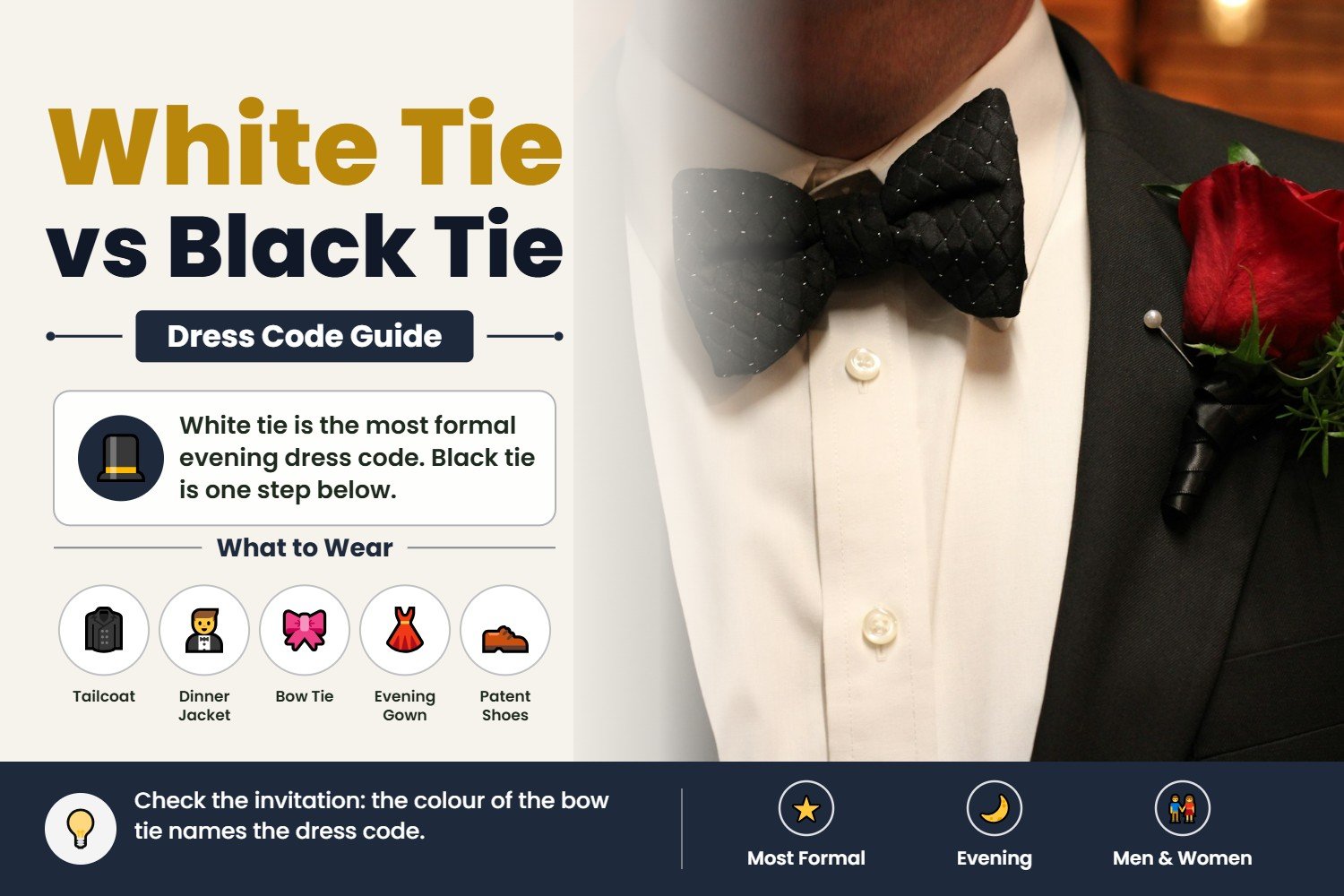
White Tie vs Black Tie: Key Differences and What to Wear
White tie and black tie are the two most formal dress codes in Western fashion, and they are easy to confuse. Both are worn to evening events, both involve a bow tie, and both call for long gowns or elegant evening dresses. The difference is in the level of formality and a handful of specific details that matter a great deal on the night.
This guide explains exactly how white tie and black tie differ, what men and women should wear for each, and which events call for which. For a full breakdown of the more common of the two, see our black tie dress code guide.
The Short Answer
- White tie is the most formal dress code there is. Men wear a black tailcoat, white waistcoat and white bow tie; women wear a full-length evening gown.
- Black tie is one step below. Men wear a dinner jacket (tuxedo) with a black bow tie; women wear a floor-length gown or a smart cocktail dress.
- The easiest way to remember: the colour of the bow tie gives the dress code its name.
- How often you will see them: black tie is common at galas, weddings and awards; white tie is rare and reserved for state banquets and the most formal balls.
White Tie vs Black Tie at a Glance
| Detail | White tie | Black tie |
|---|---|---|
| Formality | Most formal dress code | Formal, one level below white tie |
| Jacket | Black tailcoat, cut short at the front with tails at the back | Black or midnight blue dinner jacket (tuxedo) |
| Bow tie | White | Black |
| Waistcoat | White, required | Optional; a cummerbund may be worn instead |
| Shirt | White, stiff front, wing collar | White, usually with a turn-down collar |
| Trousers | Two stripes of braid down each leg | One stripe of braid down each leg |
| Shoes | Black patent leather | Black patent or highly polished leather |
| Women | Full-length ball gown, often with long gloves | Floor-length gown or elegant cocktail dress |
| Typical events | State banquets, royal events, grand balls | Galas, charity dinners, awards, evening weddings |
What Is White Tie?
White tie is the highest level of formal evening dress. Today it is mostly seen at state banquets, certain royal and diplomatic occasions, some traditional balls, and ceremonies such as the Nobel Prize banquet. Because it is so rare, an invitation that says “white tie” is a clear signal that the event is exceptionally formal.
White Tie for Men
- A black wool tailcoat, cut short at the front with two tails at the back, worn open.
- A white piqué waistcoat that should not show below the front of the tailcoat.
- A white shirt with a stiff front, a detachable wing collar and cufflinks.
- A white piqué bow tie, ideally self-tied.
- Black trousers with two lines of braid down each outer leg, worn with braces rather than a belt.
- Black patent leather shoes and black silk socks.
White Tie for Women
Women traditionally wear a full-length ball gown, often with long evening gloves. Jewellery can be at its most formal, and at the grandest occasions tiaras have traditionally been worn. Short dresses and trouser suits are generally not appropriate for white tie.
What Is Black Tie?
Black tie is the formal evening dress code you are most likely to meet. It is common at charity galas, awards ceremonies, formal dinners, evening weddings and end-of-year balls. It is still smart and elegant, but more relaxed and much easier to put together than white tie.
Black Tie for Men
- A black or midnight blue dinner jacket with satin or grosgrain lapels.
- Matching trousers with a single line of braid down each leg.
- A white dress shirt, usually with a turn-down collar.
- A black bow tie, ideally self-tied.
- An optional black waistcoat or cummerbund.
- Black patent or highly polished leather shoes.
Black Tie for Women
A floor-length evening gown is the safest choice, but an elegant cocktail dress, a dressy midi dress or smart evening separates are usually acceptable at black tie events. If you love colour, our guide to the pretty in pink trend has ideas for wearing bolder shades at formal occasions.
Common Mistakes to Avoid
- Wearing a dinner jacket to a white tie event. A tuxedo is not white tie, even with a white bow tie.
- Wearing a white bow tie with a dinner jacket. This mixes the two codes and looks out of place at both.
- Letting the waistcoat show below the tailcoat. With white tie, the waistcoat should sit neatly above the front of the coat.
- Choosing a short dress for white tie. Full-length gowns are expected.
- Ignoring the invitation. If you are unsure, ask the host. “Black tie optional” means a dinner jacket is welcome but a dark suit is also acceptable.
Frequently Asked Questions
Which is more formal, white tie or black tie?
White tie is more formal. It is the highest level of evening dress, while black tie is one step below it.
Can I wear a tuxedo to a white tie event?
No. White tie requires a tailcoat, white waistcoat and white bow tie. A tuxedo, or dinner jacket, is correct for black tie only.
Can women wear a short dress to black tie?
Often, yes. An elegant cocktail or midi dress is usually acceptable for black tie, although a floor-length gown is the most formal choice. For white tie, a full-length gown is expected.
What does black tie optional mean?
It means a dinner jacket is welcome but not required. Men can wear a dark, well-fitted suit with a tie instead, and women can choose a cocktail dress or evening gown.
Can you rent white tie or black tie outfits?
Yes. Many formalwear shops rent dinner suits and full white tie outfits, which is a practical option for occasional events.
Final Thoughts
The difference between white tie and black tie comes down to formality and a few key details: a tailcoat, white waistcoat and white bow tie for white tie, and a dinner jacket with a black bow tie for black tie. Check the invitation, follow the details and you will look right at any formal event. For more help with dress codes, read our full black tie dress code guide or browse all our fashion and style guides.