
Black Tie Dress Code Explained: What to Wear and What to Avoid
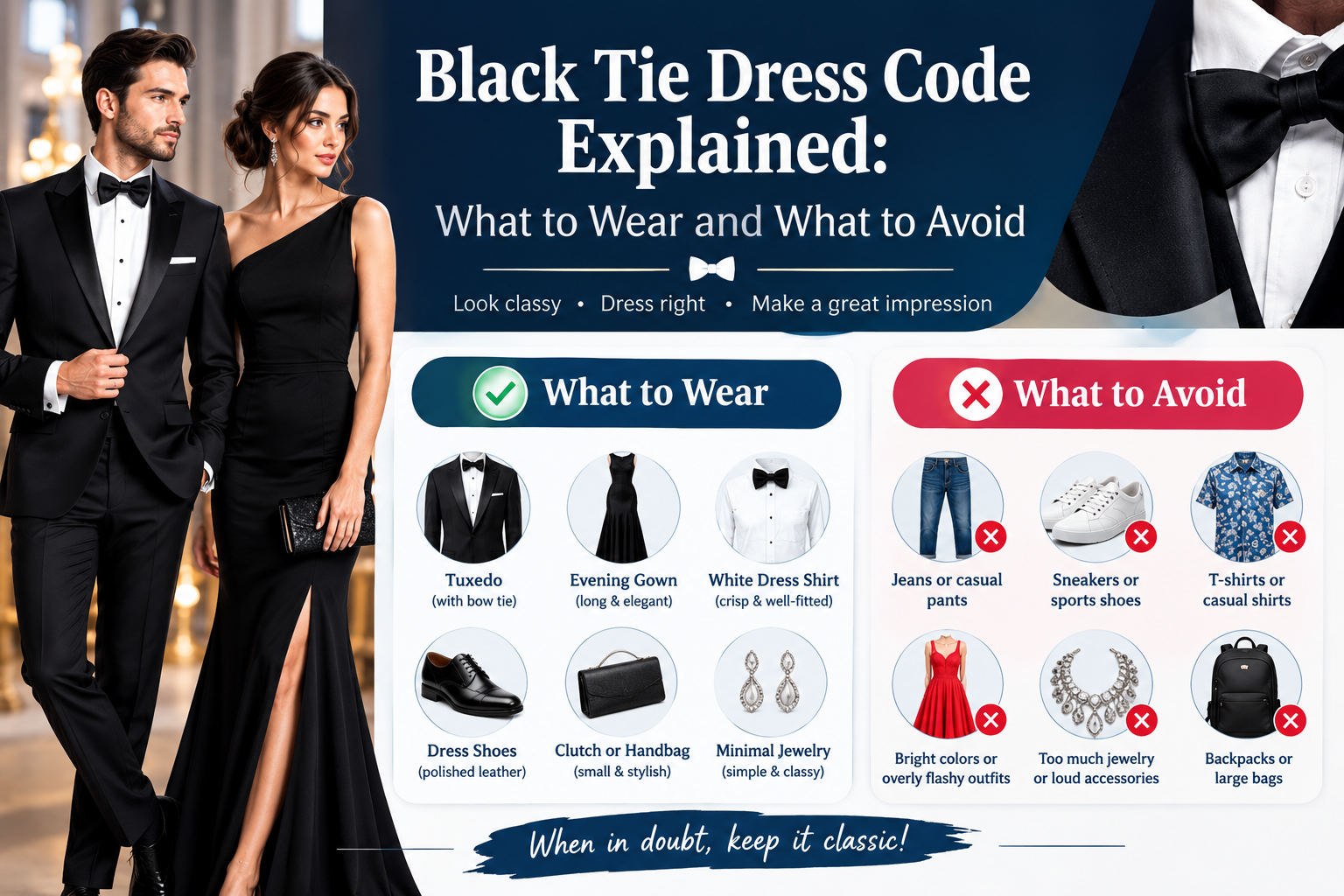
Few invitations cause as much last-minute wardrobe panic as one that simply says “black tie.” It sounds specific, but for many people it raises more questions than it answers — does it really mean an actual black tie, or something more? This guide breaks down exactly what the black tie dress code means, how it applies to both men and women, and the small details that separate a polished look from an obvious misstep.
If you’re building out a broader formal wardrobe, you may also want to check our related guide on pretty in pink: fashion trends for 2026 for ideas on adding colour to formal or semi-formal looks.
What Does “Black Tie” Actually Mean?
Black tie is a formal Western dress code for evening events, and it’s one of the oldest and most recognisable dress codes still in regular use today. The name is a bit of a shorthand — in British English, the dress code is often referred to by its main garment, the dinner jacket or dinner suit, while in American English it’s more commonly associated with the word “tuxedo.” Either way, black tie signals one thing clearly: this is a formal evening event, and casual or everyday clothing won’t cut it.
You’ll typically see this dress code requested for galas, award ceremonies, formal weddings, and upscale evening parties — almost always for events starting after 6 p.m.
Black Tie Dress Code for Men
For men, black tie has a well-established formula that leaves little room for guesswork:
- A black tuxedo or dinner jacket, usually single-breasted with classic or shawl lapels in satin
- A white dress shirt with a standing or turndown collar and link cuffs
- A black bow tie — this is the detail the dress code is named after
- Black trousers, typically with a satin side stripe matching the jacket lapels
- Black patent leather dress shoes, paired with black dress socks
Some men choose to add an evening waistcoat or a cummerbund for a more traditional look, though this is optional in most modern settings. Accessories are meant to stay understated — a semi-formal hat like a homburg or bowler is sometimes worn, but flashy or oversized accessories work against the tone of the outfit.
Common Mistakes Men Make With Black Tie
- Wearing a coloured or patterned bow tie when the invitation doesn’t explicitly allow it
- Choosing a suit instead of an actual tuxedo when the event calls for true black tie
- Wearing a wristwatch, which is traditionally considered too casual for this dress code
- Pairing the outfit with sneakers or regular business shoes instead of patent leather dress shoes
Black Tie Dress Code for Women
For women, black tie generally means a long, elegant evening gown made from a refined fabric such as silk, velvet, or chiffon. Some more modern interpretations of the dress code also allow a sophisticated midi dress or an elegant jumpsuit, though a floor-length gown remains the safest and most traditional choice.
Key elements to keep in mind:
- Floor-length or elegant midi dresses in refined, high-quality fabrics
- Heels, typically paired with a small clutch bag
- Understated jewellery rather than large, statement pieces
- Polished hair and makeup that matches the formality of the event
If a dress is strapless or off-the-shoulder, it’s a good idea to bring a light jacket or stole to wear on arrival, especially for outdoor or air-conditioned venues.
“Black Tie Optional” — What Changes?
Invitations sometimes specify “black tie optional,” which is different from standard black tie. This wording means formal evening wear is encouraged but not strictly required. In practice, this gives men a little more flexibility to wear a dark formal suit instead of a full tuxedo, and gives women more room to choose an elegant cocktail dress instead of a full-length gown. When in doubt, it’s generally safer to lean slightly more formal than to arrive underdressed.
Modern Twists on the Black Tie Dress Code
While the classic black tie formula hasn’t changed much in over a century, some modern events — particularly in creative industries like film, art, or fashion — allow slightly more personal expression within the dress code. This might include a bow tie in an unconventional material, a subtly patterned jacket, or a bolder accessory. That said, it’s always worth confirming with the host or event details before deviating too far from the traditional look, since not every “black tie” event allows this kind of flexibility.
Final Thoughts
At its core, the black tie dress code is about formality, tradition, and a polished, put-together appearance — not just literally wearing a black tie. For men, that means a well-fitted tuxedo, crisp white shirt, and black bow tie; for women, it means an elegant, floor-length gown paired with refined accessories. Once you understand the basic formula, dressing confidently for a black tie event becomes far less intimidating — and a lot easier to get right. For more on building out your formal wardrobe options, take a look at our guide on how to build a capsule wardrobe.