
Hydrogen Fuel Cells in Construction: A Cleaner Way to Power Sites
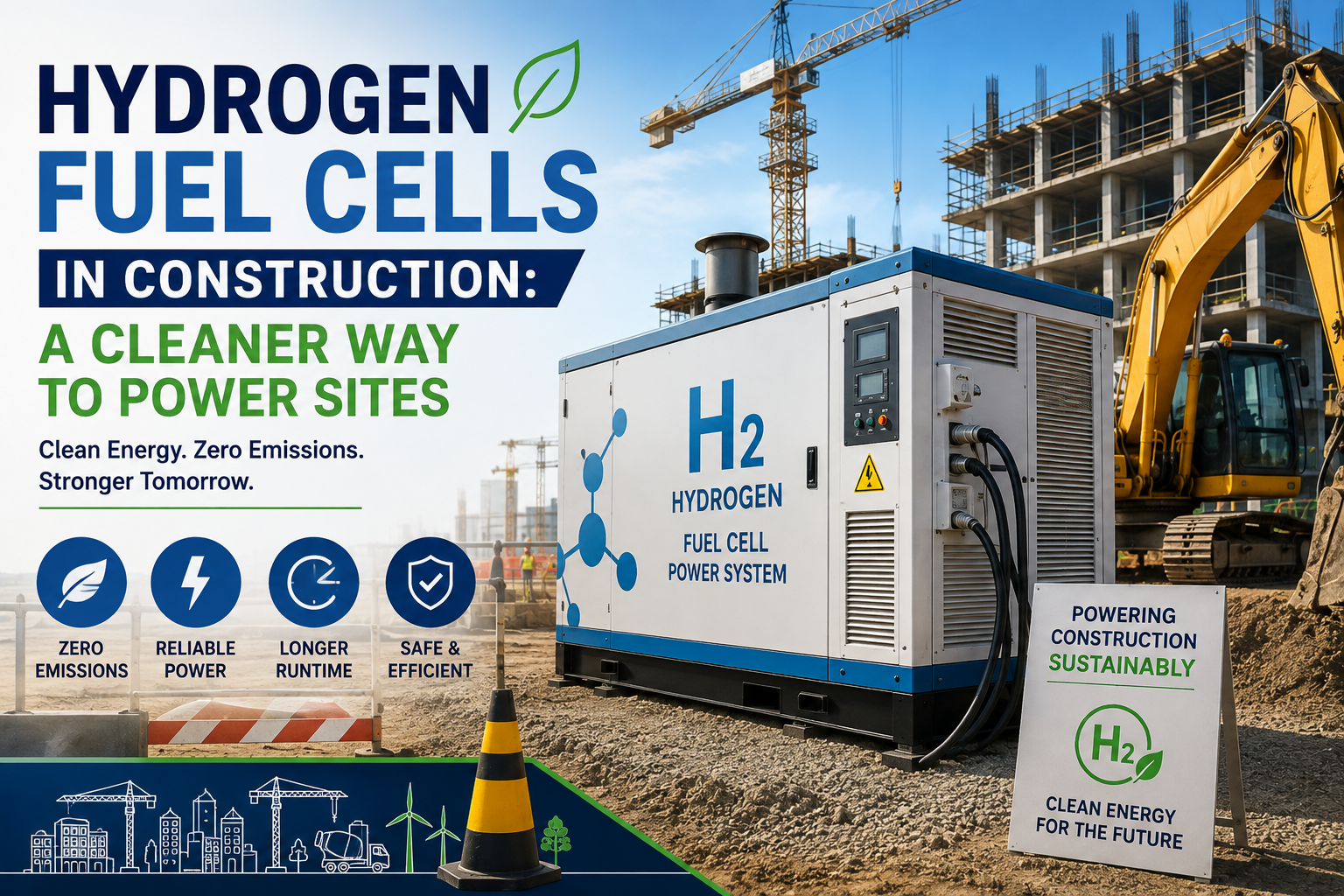
Construction is one of the most polluting industries in the world, and much of that comes down to one simple habit: diesel. Diesel generators, diesel-powered plant machinery, and diesel-fuelled welfare cabins have powered building sites for decades. As pressure builds to hit net-zero targets and cut both emissions and noise on site, hydrogen fuel cells are emerging as one of the most promising alternatives to replace diesel altogether.
This guide explains what hydrogen fuel cells are, how they’re already being used on construction sites, the real benefits they offer, and the challenges still standing in the way of widescale adoption. If sustainability in the built environment interests you, our guide on green building materials and sustainable construction practices is a great next read.
What Is a Hydrogen Fuel Cell?
A hydrogen fuel cell generates electricity through an electrochemical reaction between hydrogen and oxygen. Unlike a diesel generator, there’s no combustion involved — the only by-products are water and heat. That single difference is what makes hydrogen fuel cells so appealing for construction: they can deliver real, usable power without releasing carbon dioxide, nitrogen oxides, or particulate matter into the air.
How Hydrogen Fuel Cells Are Used on Construction Sites
Hydrogen power isn’t a future concept anymore — it’s already being tested and deployed across a range of construction applications, including:
- Portable generators used to power tools, lighting, and temporary site operations
- Mobile lighting towers for night work or low-visibility areas
- Welfare cabins, providing power for heating, lighting, and basic facilities on site
- Powered access equipment, such as mobile elevating work platforms (MEWPs)
- Backup and standby power for critical site functions
- Heavy machinery, including early-stage hydrogen-powered excavators, bulldozers, and cranes
Some of the earliest, most visible large-scale use cases have come from major infrastructure projects. The HS2 high-speed rail project in the UK, for example, has used hydrogen power units to run parts of its site operations — a real-world example of the technology being used at scale rather than just tested in a lab.
Key Benefits of Hydrogen Fuel Cells in Construction
1. Zero Emissions on Site
Because there’s no combustion process, hydrogen fuel cells produce no direct carbon emissions during operation. For construction firms working in urban areas or environmentally sensitive locations, this can make a meaningful difference to local air quality.
2. Lower Noise Pollution
Hydrogen fuel cells run much more quietly than traditional diesel generators, which is a significant advantage for sites located near residential areas, hospitals, or schools, where noise restrictions are often strict.
3. Supports Net Zero and Regulatory Compliance
With governments setting increasingly ambitious net-zero targets, construction firms are under growing pressure to reduce their carbon footprint. Hydrogen fuel cells offer a practical way to cut emissions from on-site power generation, helping companies move toward compliance with tightening environmental regulations.
4. Reliable, On-Demand Power
Fuel cells can provide continuous, stable power in off-grid environments, making them a strong option for remote sites or locations without easy access to the main electricity grid.
5. Reduced Reliance on Fossil Fuels
Every hydrogen-powered generator or piece of machinery on site is one less unit relying on diesel, helping to reduce the construction industry’s broader dependence on fossil fuels over time.
The Challenges Facing Hydrogen Adoption in Construction
Despite the clear benefits, hydrogen fuel cells still face real obstacles before they become mainstream on construction sites:
- Cost and infrastructure – producing, transporting, and storing hydrogen still requires significant investment, and refuelling infrastructure remains limited compared to diesel supply chains.
- Industry setbacks – several hydrogen-focused companies faced financial difficulties in 2024, raising valid questions about how quickly the technology can scale.
- Equipment availability – while portable generators and smaller applications are further along, hydrogen-powered heavy machinery like excavators and cranes is still in earlier stages of development.
- Upfront investment for contractors – transitioning away from diesel equipment requires capital investment that not every construction firm can commit to immediately.
Is Hydrogen the Future of Construction Power?
Industry analysts remain cautiously optimistic. Companies like GeoPura, working alongside partners such as Siemens Energy Ventures, have laid out plans to significantly expand their fleets of hydrogen power units over the coming years. Predictions from industry leaders suggest hydrogen-powered construction machinery could become genuinely mainstream within the next few years, following a similar adoption curve to battery-powered plant equipment, which has already gained real traction on sites.
That said, most experts agree hydrogen is unlikely to fully replace diesel overnight. A more realistic outlook sees hydrogen fuel cells growing alongside battery power and other clean energy sources, with each technology suited to different site conditions, project sizes, and power demands.
Final Thoughts
Hydrogen fuel cells offer construction firms a genuine path toward cleaner, quieter, and more sustainable site operations — and unlike many emerging green technologies, they’re already being used on live projects rather than existing only in pilot studies. Challenges around cost, infrastructure, and equipment availability mean widescale adoption will likely take time, but the direction of travel is clear. As net-zero pressures continue to build across the construction industry, hydrogen fuel cells are well placed to become a standard part of how sites are powered in the years ahead.